Pay Per Click Engines Archives

Click Fraud Rate Reaches 17.1 Percent

Click Forensics released their quarterly click fraud report. The click fraud rate increased 1.1 points from 16.0% in Q3 to 17.1% in Q4. Let me explain that not everyone agrees with these numbers and they are someone controversial in nature.

I normally do not cover these reports here, instead I post them at Search Engine Land, but this one is getting a lot of attention at WebmasterWorld. First, here are the key points:

- The overall industry average click fraud rate grew to 17.1% for Q4 2008. That’s up from 16.0% in Q3 2008 and from the 16.6% rate reported for Q4 2007.
- The average click fraud rate of PPC advertisements appearing on search engine content networks, including Google AdSense and the Yahoo Publisher Network, was 28.2%. That’s up from the 27.1% rate reported for Q3 2008 and down slightly from the 28.3% rate reported for Q4 2007.
- Traffic from botnets was responsible for 31.4% of all click fraud traffic in Q4 2008. That’s up from the 27.6% rate reported for Q3 2008 and the 22.0% rate reported for Q4 2007.
- In Q4 2008, the greatest percentage of click fraud originating from countries outside the U.S. came from Canada (7.4 percent), Germany (3.0 percent) and China (2.3 percent).

Folks in the WebmasterWorld are taking both sides. Some are of the opinion that this is just going to get worse and others are of the opinion that these reports are false. The discussion may get somewhat heated, but the moderators at WebmasterWorld know how to keep things level headed.

Forum discussion at WebmasterWorld.

posted rustybrick in Pay Per Click Engines at January 29, 2009 3:02 AM Comments (0)

Will PPC Ever Reach a Tipping Point?

At Search Engine Watch Forums, Discovery talks about how numerous competitors and clients are clicking way too much on PPC ads. The costs are running up and it seems that there's no end in sight. Discovery wonders if there will be an end to PPC as we know it since there are no huge safeguards to prevent costs from going into the negatives.

It's a question to which forum members don't really know the answer. If nothing at all, it's something you need to look at when you analyze your campaigns. You should check if the ad spend is too substantial and are not receiving conversions. You should consider contacting those who are click-happy or by excluding those who do.

Forum discussion continues at Search Engine Watch Forums.

posted Tamar Weinberg in Pay Per Click Engines at April 8, 2008 9:46 AM Comments (0)

Yahoo Search Marketing Votes Most Improved PPC Program of 2007

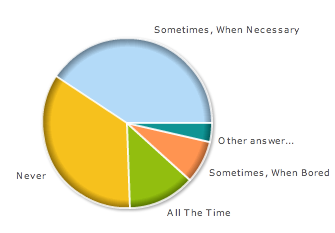
Most Improved PPC Program of '07On January 7th, we asked you to vote on the most improved PPC program of 2007. Your votes are now all in and I wanted to share the 76 responses.

Overall, most of you felt Yahoo Search Marketing was the most improved PPC program of 2007. Yahoo launched Panama, the code name of their new PPC program, in October 2006 but really didn't start having Overture account (the old PPC system) migrated for a few months after that. Yahoo, in 2007, began also migrating the new system worldwide. Yahoo's new PPC system is a total overhaul of the old Overture system, and that is why most feel it is the most improved.

Here are the raw results:

Most Improved PPC Program of '07

As you can see, Google came in a fairly close second. Google has made several significant upgrades to their AdWords system, including dozens of quality score updates, smart pricing, demographic bidding and much much more.

Thank you for taking the poll.

Continued forum discussion at Search Engine Watch Forums.

posted rustybrick in Pay Per Click Engines at February 14, 2008 7:27 AM Comments (1)

Companies Spending Too Much on Vanity Search Ads?

A Search Engine Watch Forums thread is discussing if some companies are taking vanity search ads too far. Typically, the vanity search ads companies should own are for their own name and domain name. But some are going further. Some want to own it all and become synonymous with the product line they are selling. At what point is it too much?

For example, a search on computers returns ads from Microsoft, HP, Dell, Gateway, BestBuy, Circuit City, etc. BestBuy, Circuit City and their kind are buying the ads to sell. Microsoft, HP, Dell and Gateway might be trying to sell - but they might also be buying it for branding and vanity reasons. I don't see an Apple ad there.

How about the ultimate vanity ad for a search on god:
Google Vanity Ads

Nah, I made that up but something like that would be kind of crazy.

In any event, do you think some companies are taking it too far with vanity searches?

Forum discussion at Search Engine Watch Forums.

posted rustybrick in Pay Per Click Engines at January 23, 2008 7:01 AM Comments (3)

What Was the Most Improved PPC Program in 2007?

Search Engine Watch Forums held a poll that asked forum members what their perceptions were of the most improved pay per click program in 2007. There were only 4 votes, but the clear winner is Yahoo with 3 votes (whereas Google only had one).

Mel66 explains why Yahoo is the program of choice:

My vote is for Yahoo. It's hard to believe that Panama launched in 2007 - it feels like it's been out there much longer. When I think back to all the pain and suffering of the old DTC, and the results we were getting back then, it's amazing how far Yahoo has come with Panama, as well as cleaning up their network and giving advertisers more options.

Yes, Panama launched in February and it's amazing to see how it's improved.

RedFly adds more reasons:

Without a doubt YSM. In some markets, it's traffic converts 100% better than AdWords. They also have some great features that AdWords does not have that really make the difference.

Now all the YSM guys need is a desktop editor as per forum member request and geo-targeting and they'd be as good as Google.

What are your thoughts on the most improved PPC program last year? Let's get your vote in, and if you have any compelling reasons why, write a comment!

Forum discussion continues at Search Engine Watch Forums.

posted Tamar Weinberg in Pay Per Click Engines at January 7, 2008 9:39 AM Comments (3)

Google AdWords/AdSense & Microsoft adCenter Login Problems Resolved

Yesterday, both Google AdWords and Microsoft adCenter had reported issues with logging into their respective advertising consoles.

The first Google AdWords issues were reported at WebmasterWorld last night at 7:40pm (EST). Similar issues were reported with the AdSense console at DigitalPoint Forums at 7:35pm (EST) last night.

AdWordsAdvisor confirmed the issue at 8pm (EST) last night saying:

OK, yes, this is known to engineering - it's impacting a small percentage of advertisers, and folks here are hard at it to resolve, as you might well imagine.

The Google issue was then confirmed to be resolved at about 8:20pm (EST).

Microsoft adCenter had similar issues, and the first reports came yesterday morning via WebmasterWorld at about 5am (EST).

adCenterEU confirmed the issue was resolved at about 11am (EST) yesterday:

Excellent. Engineering let me know that this is now considered to be resolved - as of just a few minutes before the time you wrote, briggidere.

Again, my apology to those who were impacted. I'm glad it was brief. ;)

Forum discussion at WebmasterWorld (AdWords), DigitalPoint Forums (AdSense) and WebmasterWorld (adCenter).

posted rustybrick in Pay Per Click Engines at December 12, 2007 7:51 AM Comments (0)

How Much Do Your Charge for PPC Services?

Do you maintain any PPC campaigns? How much do you charge? A Search Engine Watch Forums thread asks this question.

Most folks that I know charge between 10-15% of the spend. Others, according to David Wallace, now charge based on hourly rate. That makes sense too.

What do you do? I'd love to find out!

Forum discussion continues at Search Engine Watch Forums.

posted Tamar Weinberg in Pay Per Click Engines at November 12, 2007 10:08 AM Comments (3)

Is a Combination of PPC and Organic Results on the Same Page "Too Much?"

Let's say you're ranking really well for a specific keyword. You also have a PPC campaign and your paid listings are on top. Is it too much? Should you curb your spending and focus on your organic links, since in the end, it is free?

In many cases, the answer is no. They complement each other. Awhile ago, I covered a webcast where link expert Eric Ward says the same thing: an appropriate mix is critical. Bill Hartzer says the same thing on Search Engine Guide. This still holds true. Reinforcement is always helpful, and if your results appear on both the organic and paid side, your users might be inclined to click on those links and increase your revenue.

Some very valid thoughts are voiced by member J. Clark:

1. I want the conversion no matter how we get it (as long as it is profitable)
2. If my company isn't visible in those sponsored spots, our competitors will gladly take the real estate.

If it costs more to rank in both areas, do it. Just keep tweaking to find the solution that converts best for you with the least amount of spend if budgeting is your concern.

Forum discussion continues at Search Engine Watch Forums.

This post was composed on October 2nd and was scheduled for publication on October 5th.

posted Tamar Weinberg in Pay Per Click Engines at October 5, 2007 9:58 AM Comments (4)

Are Conversion Rate Metrics Useful?

A HighRankings thread discusses how conversion rates are calculated. Alan says that industry experts typically calculate conversion rates between 0.005% and 0.2% but would like to know how this number is found.

It really varies, says other members. The only use of knowing this statistic is that it may be necessary in the future to explain to your PPC customer that a big percentage of their visitors will not be converting visitors. nethy explains that it's really not a useful metric at all.

Conversion rate outside of context is not a very useful metric. That's why it is not agood idea (it think) to benchmark too seriously. Except maybe to calm a client that just realised that 98.6% of visitors to his site left without paying.

Conversion rates in general are difficult to apply over different markets or different situations. Randy adds that funnels may show higher conversions.

As a general rule though, I'd say your 00.5 - 0.2 numbers are probably talking about overall site conversions. I would personally expect CR for individual pages or even a series of pages (funnel) that lead to a sale to be considerably higher.

Forum discussion continues at HighRankings Forums.

This post was composed on September 25 and was scheduled for publication on September 27th.

posted Tamar Weinberg in Pay Per Click Engines at September 27, 2007 9:25 AM Comments (0)

Should You Mention Product Cost in Your PPC Ads?

NewKidOnTheBlock, is asking some excellent questions at Search Engine Watch Forums. His newest question is that he's wondering if it's worth targeting your PPC ads by specifying a minimum cost of a product within the ad copy so that you won't get clicks that won't convert. Apparently, Andrew Goodman's Winning Results with Google AdWords book says it's not optimal.

Im reading Andrew Goodman's book at the moment and yesterday I read that putting the price in the PPC ad was actually not a good idea as it can prevent potentially good clients from clicking on the ad as well, etc..

To be honest I had thought this was one of the best ideas to filter out low quality traffic (people just into finding information).

I'm inclined to agree with the new kid at first glance.

But experience really would determine the effectiveness of the campaign and whether specifying a price is useful or not.

In fact, some members believe that by specifying the price in the ads, the CTR dropped but the conversion rate increased, which is what you'd typically expect.

It's an interesting read, and it's also a good idea to get Andrew Goodman's book for more PPC insights.

Forum discussion continues at Search Engine Watch Forums.

posted Tamar Weinberg in Pay Per Click Engines at August 29, 2007 9:10 AM Comments (2)

The EvilGreenMonkey Dishes Out on 'Dirty PPC Tactics'

Rob Kerry, a contributing author to Search Engine Roundtable, has recently written an article on Search Engine Watch about black hat PPC tactics. He shares information about how by circumventing the human moderation filter, advertisers can display a different URL than is actually clicked through on the ad. Furthermore, if you set up multiple "phantom companies" all with unassociated bank accounts, you can flood the ad space for particular terms and push competitors out of the sponsored listings. Finally, Rob says that you can outbid your competitor and display an identical ad with a different click-through URL, giving yourself a clear advantage.

These are dirty tactics indeed, and Rob says that if you utilize them, you should do so with caution.

Have you ever tried this? Have they helped you? What are your thoughts?

Forum discussion continues at Search Engine Watch Forums.

posted Tamar Weinberg in Pay Per Click Engines at August 27, 2007 8:56 AM Comments (0)

Dynamically Changing Price of Product Based on Search Ad

A WebmasterWorld thread asks if anyone is doing any dynamic price changes based on their search ads.

For example, let's say you run two different ads, both pointing to the same product landing page. One ad might be targeting a more expensive set of keyword phrases while another ad might be targeting a less set of expensive keyword phrases.

Based on the ad, you can detect the referral and serve up different pricing and different content on the same product landing page.

If one ad costs more on a per click basis, you may want to shift that pricing up to cover the costs. If you did this in an extremely dynamic environment, you can determine the price of the click on each click and serve up a new price per click, based on a percentage of the price of that click.

For example, you know you can spend $1 per click for product A. If some keywords cost $2 per click, you may determine you need to increase the price of product A by 4%. Even better, you may even be able to decrease the price of your product for those ads that cost you less than what you can spend to make a profit.

Forum discussion at WebmasterWorld.

posted rustybrick in Pay Per Click Engines at July 20, 2007 7:49 AM Comments (0)

A Higher Pay Per Click CTR Does Not Always Lead To More Sales

Rand Fishkin made an interesting comment on ad optimization in a recent blog post. At the bottom of his post, he adds:

high CTR doesn't always mean better conversions, though there is often some correlation

This quote was then taken by GuyFromChicago at DigitalPoint Forums for a discussion. What are your thoughts of Rand's statement? Is he wrong? Is there a meaningful correlation between click through rates and conversion rates?

GuyFromChicago starts off with his opinion, saying that they can be a relationship between ad copy and conversions as long as the searcher will find what s/he expects beyond the ad:

While CTR and conversion rates can be related - theory being if your ad is well written (in relation to the keyword+match) and an accurate representation of what a searcher will find after clicking your ad the likelyhood of them converting will be higher - I've not seen this play out in the real world with any degree of statistical relevance.

But the problem remains that there is no statistical relevance, a thought that is echoed by other members. Some say that you can see a correlation if you have so many large advertising campaigns across a variety of niches, but this would take a long time to study. Another member feels that statistical relevance is even overrated.

Forum discussion at DigitalPoint Forums.

posted Tamar Weinberg in Pay Per Click Engines at July 19, 2007 10:02 AM Comments (1)

Can Pay Per Click Conversions be Based on CTR Rates?

Say you have a campaign and consistently see click-through-rates of 10% over a long period of time. Can you use that data to accurately predict whether the same thing will occur in the future? This question is being asked and discussed at WebmasterWorld.

I would say that it is tough to make any determinations because the market is volatile. There is a lot of change that can occur and you can't definitively say with full confidence that the future will hold the same results. This is apparently a notion echoed by a member on the forums:

i'd say that because the market is not a stable laboratory atmosphere where many things are held constant, predicting things using classical science and statistics is a problem. too much can change that you can't control, so why calculate any precise future confidence levels in predicting an outcome.

Some others see similar fluctuations such as seasonal change and occasional drastic "bumps." The advertiser is advised to carefully monitor these anomalies rather than consider it a gamble.

Any huge plan (like some kind of investment) would need a careful examination.

Forum discussion continues at WebmasterWorld.

posted Tamar Weinberg in Pay Per Click Engines at July 5, 2007 9:18 AM Comments (0)

Should You Stop Advertising on the Main PPC Channels?

A Search Engine Watch Forums member is frustrated with the amount of time and energy required to optimize his PPC campaigns on Google, Yahoo, and MSN. He had come to the Search Engine Watch Forums to get advice on where to go next. Should he try other networks?

Discovery writes to say that he should continue reaching into the existing networks and continue optimizing until there are no options left.

I would not suggest 2nd tier networks that endores "contextual" ads until you have fully exploited G, MSN and YSM. Of course keep your eyes open on new ad models such as Pay Per Acquisition like Turn.com and old affiliate stand bys like commissionjunction.com.

Additionally, he adds, with other advertising technologies, there is a lot of promise and ways to make gains in your advertising campaign.

Google is rolling out audio/radio ads and Video ads which will ultimately migrate into the realm of internet TV/ possibly Cable TV in the future. Keeping up with how to use these advertising channels is important for any small or large business.

Forum discussion at Search Engine Watch Forums.

This post was written on Monday, July 2nd, and scheduled for publication on July 4th.

posted Tamar Weinberg in Pay Per Click Engines at July 4, 2007 8:38 AM Comments (0)

Determining the Success of a Pay Per Click Campaign

Advertisers should know the importance of maximizing their presence online with the least amount of cost, but to do that, they need to effectively measure the success of their campaign. How long does that take? A Cre8asite Forums thread brings up this question.

Once a PPC campaign is launched for a brand new website, is there a certain amount of time to wait before drawing conclusions about the PPC ad, the effectiveness of the landing page, the quality of the website, and the desireability of the products?

It pretty much depends on the impressions and clicks that your ad has generated:

I wouldn't measure it in time but number of impressions and number of clicks. Both need to be sufficiently high to give you a statistically sound sample.

Administrator EGOL has golden words of wisdom that I've heard time and time again. Because there are so many factors in the market, you need to consistently be on top of your ad campaign. "Success" may only be fleeting.

So, PPC is not a set it and forget it venture.

Ammon Johns has another nugget of wisdom based on decisions made by prospective buyers:

So the length of time to evaluate your conversions will vary on the natural "consideration period" for the product or service on offer.

Additionally, there's a Cre8asite Forums post that points to the Google Website Optimizer tool that is available for advertisers as well.

Some additional insights and advice is shared in the Cre8asite Forums discussion.

posted Tamar Weinberg in Google AdWords at May 25, 2007 10:35 AM Comments (0)

Does "Set It & Forget It" Still Work In The PPC Game?

In the old days of the Pay Per Click management days, you used to hear the phrase - "set it and forget it." Meaning, you set up your pay per click campaign in Google AdWords, Yahoo! Search Marketing and others. Then you watch it for a couple weeks, make some tweaks and when things are running smoothly, you just walk away and let it run itself.

A WebmasterWorld thread asks if the "set it and forget it" practice still works? With Google AdWords changing their algorithms every 6 months or so. With Yahoo! recently upgrading to a new algorithm in Panama. With adCenter launching with more features to shake a stick at... Does the "set it and forget it" methodology still apply?

It appears not.

Everyone in the thread seems to agree that for the most part, that concept is long gone. You at least have to check in weekly for even the smallest campaigns. I like netmeg's response:

I have one client who has set a rather small (in my opinion, TOO small, considering the breadth of his product line) daily budget for what he wants to spend on AdWords, and he hired me a couple years ago to fix his existing AdWords account and kind of oversee it. I added as many phrases as I felt I could within the strictures of his low budget, and then I turned the Budget Optimizer on most of his campaigns, and just let it run. He absolutely will not raise the budget, so there was a limit to what I could do with it. Once a week I go in to see if anything looks weird, and anything that has gone inactive I might have to move off to a separate campaign (that's not on Budget Optimizer) in order to raise the CPC, but that's about it. It means a lot of his positions are down in the 5-8 range, or even lower - but it probably gets him more overall clicks for the money, and all I can do is hope that when people click on the ads, if they don't buy what they're clicking on, they'll see something else they're interested in. In any case, we do get conversions, and the client seems to be fairly satisfied with it. It's not the way I prefer to do it, but it's what I could do with what was handed me.


That's the closest to auto-pilot that I can get.

Would love to hear more on this from others.

Forum discussion at WebmasterWorld.

posted rustybrick in Pay Per Click Engines at March 27, 2007 8:11 AM Comments (5)

Click Fraud is 0.02%, Invalid Clicks 10%, $1B Lost To Click Fraud Yearly

google-invalid-clicks.pngGoogle came out and finally gave us some numbers.

0.02 Percent of Clicks Pass Through Google's Fraud Detector:

Our Click Quality team investigates every inquiry we receive from advertisers who believe they may have been affected by undetected click fraud. Many of these cases are misunderstandings, but in most cases where malicious activity is found, the clicks have already been filtered out (and not charged for) by our real-time filters. Because of the broad operation of our proactive detection, the relatively rare cases we find of advertisers being affected by undetected click fraud constitute less than 0.02% of all clicks.

Invalid Clicks Account For Less Than 10% Of All Clicks:

Our invalid clicks rate – the activity rate – has remained in the range of less than 10% of all clicks every quarter since we launched AdWords in 2002. At Google’s current revenue rate, every percentage point of invalid clicks we throw out represents over $100 million/year in potential revenue foregone.

So, in a sense, click fraud is costing the industry $1,000,000,000 ($1 billion) per year.

Danny has an excellent break down on all of this, so I won't get into why Google released it and how this all makes sense. It is worth a read, so check it out.

Currently we have threads at both WebmasterWorld and DigitalPoint Forums, with WebmasterWorld having discussion in it. Here are some quotes:

totally misleading. How many advertisers can analyze (or choose to) the data and take the issue up to google?
Those 10% invalid clicks are identified as such by Google and are not charged to advertisers. What they are saying is that maybe 0.02% of those clicks are invalid *and* charged to advertisers. That sounds like peanuts and as long as advertisers have a decent ROI, I don't see what's the big deal, as long as Google is diligent with banning fraudsters. No advertising medium is 100% efficient.

Forum discussion at WebmasterWorld and DigitalPoint Forums.

posted rustybrick in Google AdWords at March 1, 2007 7:56 AM Comments (3)

Geo Targeting Tips With Yahoo! Search Marketing

There is a relatively old Search Engine Watch Forums thread that has a new post from Discovery with some nice information. He was originally wondering why his geo targeted campaign towards Texas was sending zero traffic to his site and zero impressions on his ad.

Yahoo! informed him he was being way to specific with his campaign.

What Discovery did was created one campaign that was:

  1. Geo targeted to Texas
  2. Uses Texas specific keyword qualifiers
  3. Created a Texas specific landing page

Yahoo! recommended that he create two different campaigns. A campaign for that was geo targeted towards Texas, using the geotargetting tools. And another campaign that uses Texas specific keyword qualifiers.

That method worked, Discovery is now getting traffic, but the traffic isn't converting as well as one would like.

Why did the previous method not work? I suspect it may have to do with it possibly being rare for some Texans to search using the word Texas. So imagine, you live in Texas and you are looking for a local auto insurance company. Would you search "texas car insurance" or "car insurance"? I am not sure - I am a bit too involved in search to be considered the typical searcher...

Forum discussion at Search Engine Watch Forums.

posted rustybrick in Yahoo! Search Marketing at February 23, 2007 7:12 AM Comments (0)

Overture Keyword Selection Tool Back Online

At least for now, the Overture Keyword Selection Tool is now back online, I think as of yesterday some time.

Monday we reported some sporadic reports of the tool going offline for a bit. Then on Wednesday we reported Yahoo!'s statement saying that the tool is basically dying and that Yahoo! is building a new one.

I suspect they fixed some of the issues now.

Forum discussion at DigitalPoint Forums.

posted rustybrick in Yahoo! Search Marketing at February 2, 2007 7:27 AM Comments (5)

Microsoft Switches Rolls With Baidu: Baidu Running Ads on Microsoft China Properties

Yesterday I reported at Search Engine Land that Microsoft China To Display Baidu's Search Ads. Yes, Microsoft asked Baidu if they would run and manage the ads on their China properties. My reaction and the communities was something like, wait a second, shouldn't Microsoft be powering Baidu's PPC ads? But no. Baidu is the powerhouse in China, so Microsoft decided Baidu is the best bet for monetizing their Chinese properties.

WebmasterWorld senior member, walkman, said;

am I missing something or should it be the other way around?

But Quadrille feels this is just a way for Microsoft to learn from Baidu and as soon as the contract expires, they too will enter the Chinese PPC market.

It's just Bill poking his tongue out at Google China! More seriously, it's probably a fairly short contract while MSN develops its own China search.

Win or Loss for Microsoft? Time will tell.

Forum discussion at WebmasterWorld.

posted rustybrick in MSN / Microsoft adCenter at December 15, 2006 7:31 AM Comments (1)

Amazon's PPC Program, Clickriver Ads

A reader asked that I give the new Amazon PPC program some coverage, since there is a WebmasterWorld thread on it. The thread links to Gary's ResourceShelf post named What’s A ClickRiver? New Pay-Per-Click Sponsored Ad Program from Amazon and A9.

Clickriver Ads is an advertising program -- currently in beta -- that allows businesses to place sponsored links on Amazon.com®, next to search results and on product detail pages. Clickriver Ads presents a unique opportunity to advertise services and products that complement the selection on Amazon.com, an online marketplace with tens of millions of active customer accounts.

Clickriver Ads was created by A9.com®, a search technologies company based in Palo Alto, California. A9.com is a wholly owned subsidiary of Amazon.com.

Visit https://clickriver.com/advertiser/ for more information.

Forum discussion at WebmasterWorld.

posted rustybrick in Pay Per Click Engines at November 13, 2006 7:33 AM Comments (0)

Click Fraud Causing PPC Armageddon?

And this weeks 'Armageddon For Paid Search' subject is... Click Fraud (according to the Washington Post).

OK, maybe not put that strongly, although the mainstream newspaper does go to quite some length to unravel the underground world of paid to click.

From her home surrounded by cornfields in Dow City, Iowa, Jackie Park spends hours each day on her computer, earning half a penny every time she clicks on an Internet advertisement.
By the end of the day, she usually tallies a few hundred clicks, yielding about $300 a year. It's not much, but it adds up for the 35-year-old mother of five who became disabled three years ago.
And what's an undercover exposé without a trip to a far-away country, let’s say - India?
In New Delhi, small companies place ads in the top English-language newspapers every week looking to hire people who will use their home computers to click on text ads on certain Web sites. One ad offers the equivalent of several hundred dollars a day for spending two hours on the Internet. A visit to the company that placed the ad, Shipranet, leads to a small windowless apartment converted to an office...
As commented on at ThreadWatch, Click Fraud scammers are quite old news and bringing this information into the mainstream will probably only serve to increase the number of people looking to recruit such companies in order to make a quick buck off AdSense. At half a penny a click going to the people performing the mouse-action, it does go to show however where the real money in click fraud is pocketed - your friendly poverty-line recruiting middleman.

Further Discussion At WebmasterWorld.

posted evilgreenmonkey in Pay Per Click Engines at October 23, 2006 8:38 AM Comments (4)

Dynamic Phone Numbers & Extensions For Your PPC Campaigns

Tracking your metrics is vital in today's world of marketing, no one would argue with that. But when it comes to tracking PPC campaigns down to the phone call, it can get expensive and cumbersome.

Discovery, Moderator at SEW Forums said in a Search Engine Watch Forums mobile ad thread;

We apply this same method to all of our marketing campaigns down to a pretty granular level. We have a unique phone number tied to every marketing campaign. In PPC and at Google for example we tie it down to the campaign level, in some circumstances down to the ad group level. The webpages dynamically display the proper number based on passed variables.

It is import, so import, you should probably also automatically associate that call to your PPC metrics, through integration of that data.

Today, it is really doable by most quality developers to get this done at a reasonable cost.

With open source phone systems and PBXs such as the Asterisk solution, you can easily build out a custom solution for your dynamic PPC campaign, even your organic campaigns.

Dynamically, your web pages can assign a unique phone number or phone extension to dial, that will automatically route and track that call for what it truly is. Setting a cookie, can be done over the phone in this sense and it doesn't have to cost you a million dollars to set up.

Who knows, maybe I or someone else will come out with a plugin for Asterisk that does this?

Forum discussion at Search Engine Watch Forums.

posted rustybrick in Pay Per Click Engines at September 26, 2006 7:16 AM Comments (0)

Ranking Google AdWords, Yahoo! Search Marketing & Microsoft adCenter

An excellent WebmasterWorld thread named Top 3 PPC: Where does AdWords Rank for You ranks the three top players, Google AdWords, Yahoo Search Marketing & Microsoft adCenter against each other. The ratings are broken out by (1) Traffic Volume, (2) Quality of Click, (3) Ease of Use, (4) Lowest Cost per Conversion, (5) Technical Support, (6) Has the Options for Your Needs, (7) Versatile and (8) Overall Rank. We have a nice amount of responses so far, but I would love to see more, currently, here is how they rank.

G = Google, Y = Yahoo and M = Microsoft. Each letter represents a vote for that slot. Ties are represented /.

(1) Traffic Volume:
#1 G G G G G G M G G
#2 Y Y Y Y Y Y Y Y Y
#3 M M M M M M G M M
(2) Quality of Click:
#1 M M M M M M M Y G
#2 G G G Y G G G G M
#3 Y Y M G Y Y Y M Y
(3) Ease of Use:
#1 M Y G G G G G G G
#2 Y G Y Y Y M Y/M Y M
#3 G M M M M Y X M Y
(4) Lowest Cost per Conversion:
#1 M M M M M M M G G
#2 G Y/G G Y Y G G Y M
#3 Y X Y G G Y Y M Y
(5) Technical Support:
#1 M Y G Y M Y M G Y
#2 G M/G Y M Y M Y Y M
#3 Y X M G G G G M G
(6) Has the Options for Your Needs:
#1 G Y/G G G G G G G G
#2 Y M Y Y M M M Y M
#3 M X M M Y Y Y M Y
(7) Versatile:
#1 G Y G G M G G G G
#2 Y G Y Y G M M Y M
#3 M M M M Y Y Y M Y
(8) Overall Rank:
#1 G M M G M G M G G
#2 M Y/G G Y Y M Y Y M
#3 Y X Y M G Y G M Y

Forum discussion at WebmasterWorld.

posted rustybrick in Pay Per Click Engines at August 31, 2006 7:43 AM Comments (1)

Search Engines Form Pact to Fight Click Fraud

A WebmasterWorld thread notes of a BusinessWeek report that Ask, Google, Microsoft, and Yahoo are coming together to form standards on what is an "invalid click."

The Internet's leading search engines are teaming up with an advertising trade group to find a better way to identify and measure "click fraud," a scam that has raised doubts about the Web's trustworthiness as a marketing vehicle.

The initiative, announced Wednesday by the Interactive Advertising Bureau, will draw upon the expertise of Google Inc., Yahoo Inc. and Microsoft Corp. -- the owners of the top online search engines -- to attack a problem threatening to erode their profits. Combined, the three companies control 86 percent of the lucrative U.S. search engine market, according to comScore Media Metrix.

Danny at the SEW Blog also covered this with a quick recap of the News.com story.

Definitions are incredibly important and without it, you won't know exactly SEMs and PPC Engines are trying to prevent.

Forum discussion at WebmasterWorld.

posted rustybrick in Legal Issues in Search at August 3, 2006 7:52 AM Comments (1)

Does Google AdWords PPC Prices Affect Yahoo! Search Marketing's Prices?

A Search Engine Watch Forums thread begs the question, can the price increases seen at Google AdWords have an impact on the prices at other PPC engines, such as Yahoo! Search Marketing?

The logic behind the question is that while some people bids rose from a few cents to a few dollars, they may not be willing to spend that much. But they may be willing to spend half of that much. If so, would they decide to increase their bids at Yahoo! to achieve higher placement, just because they know they can?

grnidone rationalizes, "It seems that perhaps some people may not want to pay $5.00 a click base price for a google ad, and instead made their Yahoo ads more competitive."

However, he said based on the data he has seen, the price changes are a "mixture" and there is no pattern to prove his own theory yet. He would like to know if others are seeing such patterns or not. Could be interesting.

Forum discussion at Search Engine Watch Forums.

posted rustybrick in Yahoo! Search Marketing at August 3, 2006 7:40 AM Comments (2)

Worried About Click Fraud?

The Internet marketing platform known as "pay-per-click" marketing has grown in popularity, gathering new participants at a very rapid pace. Along with the majority of legitimate businesses involved in search engine marketing and the contextual marketing products tied to it (which place the same ads in sites deemed to be relevant), there come the "fraudsters." Click fraud is naturally a worry to many. Following up on recent coverage of this topic in here (Google's Efforts to Curb Click Fraud and Click Pirates), we'll take one more chance to highlight the subject.

A recent thread at WebMasterWorld Forums was started asking if there is a way to stop someone from clicking on your website if you suspect them of fraud. The member describes finding that a site which offers the "you click on me and I'll click on you" version of click fraud was the number one referring site in his logs. The first thing to do, as pointed out, is to contact the portals that are publishing your ads. Then someone offers code which specifically blocks a website from accessing yours through a link, returning a 403 "Forbidden" error.

I wonder...is this enough to protect yourself from an individual site? Does the click still count in some networks even if it leads to the error page? Join the discussion at WebMasterWorld Forums.

I personally feel that the problem needs to be tackled at a higher level. People do not have time to police their logs to find suspected fraudulent “clicksters,” but paid software does exist for that purpose. One free product that seems to be gaining traction is ClickFraudNetwork. Also, SEMPO is teaming with Fair Isaac to produce an in depth report on the matter.

posted chrisboggs in Pay Per Click Engines at July 26, 2006 8:04 AM Comments (0)

Click Pirates Looting & Recruiting

pirate.jpg
Yesterday at Search Engine Watch Blog I wrote Click Pirates Making A Mockery Of The Text Ad Space which covers a Peter Da Vanzo post on a thread at GetPaidForums. The threads discuss a program where people sign up and work together to form one huge pool of funds by clicking in ads on sites. Yes, mass manual click fraud, done by teams of, what I like to call, "Click Pirates."

The thread is 39 pages long and has tons of concerns and laughs about click fraud. Here are some of the disturbing quotes I pulled from the thread.

You do realize that someone up the click fraud line had money stolen from them by the click fraud system set up in these two programs in order to pay you don't you? Just because you got paid from the proceeds of theft doesn't make it right because someone DID get ripped off in order to pay you. $190 worth of valid searches for the sake of searching had to come out of someone's pocket in order to pay you right? Do you even care who's pockets that money was taken from? Or is it ok as long as it went into yours?

People just don't get it, read this.

What's wrong with click fraud? Search engines are suppose to be free. People should not pay to have their listing posted.

Why? because...

It is fraud because he is sending you Parked Domain ads fed by google or yahoo at a ptr site.

Click Pirates, that is what they are. Forum discussion at Search Engine Roundtable Forums.

posted rustybrick in Pay Per Click Engines at July 19, 2006 7:53 AM Comments (0)

False Positive ROI Data in PPC Search Ad Camapigns?

Last week we took a look at the Measurability of Search Engine Ads this week we have a new thread that has sparked the interest of many top names in the business. The thread is named The ROI from SEM can not be measured accurately and resides over at Search Engine Watch Forums. The thread creator starts off with a really long post. I summarized it as follows;

Big Brand X has PPC ads for the the keyword phrase of the Brand Name of Big Brand X.

That keyword phrase brings in $10,000 in sales per day but costs $5,000 per day on PPC spend.

You remove the keyword phrase from the campaign and you have the same gross sales on your site.

So in essence you are saving $5,000 per day.

But the tracking tools show you have a ROI of $5,000 per day.

He is fighting a battle with his company, to keep the campaigns live, due to the above example. He has received a ton of advice, including;

Simply bid with PPC using same/similar ads for a different site or subsite. Heck, for a spend that size you could alternate every hour (or any other way you wanted to) for as long as it takes to get the information necessary, as long as you were using PPC software capable of making those changes on the fly. Use a second company if necessary.

Treat the PPC as you would the banner ads, just trickier to control. It sounds like all you really need to do is show the ROI (or lack thereof).

And more. But the bottom-line, if he doesn't make it happen, the affiliate will, as Mikkel points out;

My best advise for a client like that would be: Drop search marketing and leave the market to your competitors.

Interesting discussion, forum discussion at Search Engine Watch Forums.

posted rustybrick in Tracking & Conversion Measurements at May 22, 2006 8:15 AM Comments (0)

Will PPC Costs Rise With Gas Prices?

A DigitalPoint Forum thread asks if the prices of search ads rise with the price of gas prices. Some reason that Google AdSense (or YPN) publisher's costs are going up, so the ad prices must go up. Others reason that Google AdWords (or YSM) advertiser's costs are going up, so they have less disposal income to spend on ads, because it is all going to gas, so the ad prices will go down.

But as more new advertisers get into the PPC advertising game, costs tend to go up. It is the nature of the auction based pricing mechasinim.

Forum discussion at DigitalPoint Forums.

posted rustybrick in Google AdWords at May 18, 2006 7:54 AM Comments (0)

SearchFeed PPC Reviewed At Forums: Honest But Low Payouts

A thread at Digital Point forums named Searchfeed.com Experience sums up several people's experience with SearchFeed.com. The review is primarily of publishers explaining that most of the clicks are values between 1 to 2 cents, but that SearchFeed.com is honest and pays on time. Aaron Wall, in the thread, explains that with the second and third tier PPC companies, you need to be more worried about click fraud, as an advertiser.

The overall impression I received from the thread was that people were happy with SearchFeed and they just hope it paid out more.

Forum discussion at Digital Point Forums.

posted rustybrick in Second Tier PPC Engines at March 22, 2006 8:06 AM Comments (1)

Search Ad Buyers Forum aka Search Marketing Style Council


This session covers what's new in the world of paid listings and other search advertising programs with moderation duties handled by Dana Todd of SiteLab. Dana and the panel give this session a "fashion" theme since it was fashion week recently here in New York, hence the photo above. Speakers include: Misty Locke of Range Online Media, Brian Mark of Toolbarn.com, Michael Sack of Inceptor and Joshua Stylman of Reprise Media.

This session is very different in that it is a forum, with no PowerPoint presentations. Dana Todd starts out with "news" including, click prices are up, Ask is sexier, Looksmart says they're better, MSN draggin out launch, pay per call is getting some attention and no more trademark ads on Yahoo.

A SEMPO survey reported that only 33% of respondents were happy with their SEM agencies for PPC, down from 62% last year. 25% were unhappy and 42% report mixed results.

What's keeping Dana up at night?
- Erosion of the search bubble, margins and SEM workforce
- 2nd tier engines are losing the trust battle
- Where is vertical search going?
- Small businesses are underserved. Their budgets are too low for most agencies to be able to justify taking on.
- A very large % of companies reported in the SEMPO survey want to take SEM in-house. Are SEM's better off being absorbed into agencies, companies?
- Are SEM firms going to become the service bureau's of the future?

Dana now walks the audience.

What kind of ratings would you give search engines for their input?

Misty: Room for a lot of improvement. Overall, rates them a 6.
Brian - a 6 is generous. We're not seeing a lot of service as an end buyer. No rep, no service.
Dana - is no rep better than a bad rep?
Michael - who's creating the strategy? Laments search engine ad reps, wet behind the ears, mis-advising clients. Gives an example involving Google. -1
Josh - Agrees that some "fresh off the boat" people at search engines are advising clients. Yahoo seems genuinely interested in SEMs buying their product. MSN is making an effort towards better customer service, their service "has been outstanding".
Misty - AOL is actually making an effort. What is the "next level" of service we need?
Michael - You should be getting your research from 3rd pary entities, not from search engines that have an interest in competitors bidding on the same terms.

Dana - What about the technical availability. Horror stories about systems being down, little lead time for system maintenance. Asks panel:
Misty - How many of you use APIs as a way to upload mass updates. Yahoo has done well to communicate technical issues. Google gets negative points. They are still in the habit of making changes and not telling anyone. "Oops it didn't work". MSN gets five stars.
Josh - Agree on Yahoo/Google communication. That said, Google's system is a more stable platform.
Misty - When APIs go down, has anyone noticed that you can't update your bids for 3-4 days?

Audience: You mention Ask's API. The question about ASk is distribution. That's a difficult call because some ads will go out to tier one partners some to tier two. Ideally we would segment.
Josh - Wonders wheather Ask will go the route of Google and allow advertisers to build their own ad network and cherry pick sites. "Ask is the RC cola of search."

Audience: Can you address the fee structure for clients?
Misty: It varies, but flexible. It needs to be enough to cover of the assigned ad team. Usually % of media. Hybrid of % and flat fee. Hybrid of $, flat fee and CPA.
Josh - We're a public service, we do this for the love of the craft - audience laughs.

Dana - We're in the communication industry. Are the search engines good communicators?
Black box - when you're bidding in the Google system you don't get 100% disclosure of all data related to that ad and how the ad is served and when.
Michael - When I think of paid search advertising, I think of it in terms of a calculated risk. When Google doesn't communicate how they are going to rank or serve your ads, you leave the realm of calculated risk and move into just risk.
Josh - Google has made some controls available - separating contextual from search. It's the auction process that's the issue. The fact is, no one knows how Google works. It's a matter of time before Yahoo implementing it's own complex marketplace.
Misty - Describes how when you upload terms to Yahoo, behind the scences, Yahoo relates some of your phrases behind the scenes to other phrases. Example: "travel" to "budget travel". For other media, you "know" where your ads are going to be placed. With search, you do not have those kinds of controls. Scores search engines negative 25.
Michael - Being able to test all the intermediary variables that affect conversion is part of good marketing. Doing so is part of the value that SEM agencies bring to clients. Scores search engines a zero.
Brian - Describes how he cannot control the ad placement is frustrating, particularly with Google.

Audience - I find it hard to believe that the companies and agencies don't tell the search engines about their disatisfaction and issues with "black box" ad serving.
Misty - They do have advisory boards and councils. They are also running a business. There have been improvements.

Audience - I sit on one of those boards so this is good to know.
Michael - Can you imaging what would happen to have a sit-in and pause your ad campaigns? They might listen when that happens.

Audience - I'm one of those advertisers that wants to bring SEM in-house. If your compaign cannot be executed according to the strategy, why would I outsource?
Dana - MarketingSherpa did a study on agencies vs in-house. Agencies do it better because it's all they do. The other part is maximizing the campaing, the linguistic part of it. Those are not typically the skills of an in-house marketer.
Josh - A lot of that heavy lifting happens through technology. Agenciesy can focus on analysis and getting strategic value out of the data. In house marketers do not always have access to that technology and do not get to spend the time on the strategy.

Audience - It seems last quarter Google's revenues were up over 100% and therefore your revenues are up over 100%, yet there is some disatisfaction in what you're saying.
Josh - I don't think this is a concern about revenue slowdown. Our businesses are growing as fast as any sector. You're sensing frustration of the changing nature of the industy. Understand, PPC used to be about 5% of pages and now with contextual it's about 100%. Soon print and radio will come into the mix.
Misty - Service has to set you apart. The fact that over 50% are not happy with SEMs, there's confustion about hwo you can trust.

Money Makeover - How do you think the search engines are doing handling your money, the advertisers' money?
Who do you think is the best money manager?
Panel- MSN

Click Fraud
SEMPO just released info that the number of advertisers concerned with click fraud has increased substantially.
Michael - Surveys audience 20-40% citing click fraud
Josh - Yahoo and Goolgle do a tremendous job at detecting click fraud. We've seen an amazing response to detection and getting credited. Tier twos are not as responsive. Marketers need to account for a pecentage of their ad spend to click fraud.
Michael - I have a friend that owns a sweatshop that has employees click on his clients' competitors ads. Search engines should get together as a consortium and share data anonymously and find the fraud.

Is it Google, Yahoo or MSN?
Showed screen shots of anonymous search results pages - they seem very similar.

Dana - Is anything creative happening?
Michael - MSN AdCenter people are saying AdCenter is "just like Google". It is exactly like Google. Where's the creativity?
Josh - Brings up trends towards offline integration such as dMarc and Google print.
Misty - Looking forward to enhancements such as display of the ads.

Audience: What about second tier search engines. Enhance, MIVA? Are they worth considering?
Michael - There's a reason you don't hear talk about tier 2 engines.
Josh - You can get value from tier 2 engines but be careful.
Michael - Shopping search engines are a different category than tier 2 engines like Kanoodle, Miva, etc.
Misty - Second tier engine campaigns are up/down up/down.
Josh - To use the financial metapor, tier two engines are the "over the counter" stocks.

SES NYC Tag:

posted Lee Odden in Search Engine Strategies 2006 New York at February 28, 2006 12:53 PM Comments (1)

PPC Expert, Andrew Goodman Interviewed

If you are a PPC nut, then you know the name Andrew Goodman. Well, Lee Odden has interviewed him and the interview is live at Search Engine Guide, if your a PPCer, its worth a read.

Forum discussion at DigitalPoint Forums.

posted rustybrick in Interviews at February 24, 2006 8:11 AM Comments (0)

3rd Tier PPC Fraud Very Bad: 100% Click Fraud?

You think PPC fraud is bad at Google or Yahoo? Wait until you try out the third tier programs. A thread at Search Engine Watch Forums named Findwhat.com fraud clicks issue describes some of these company's including Findwhat and their inability to track and prevent click fraud at the level one is accustomed to with Google and Yahoo.

Some members say they realized click fraud of up to 100% of clicks! 100%! I am not sure if that is even possible, but that is what was reported at the thread.

Forum discussion at Search Engine Watch Forums.

posted rustybrick in Pay Per Click Engines at February 6, 2006 8:48 AM Comments (3)

AOL to Use MSN adCenter and Drop Google?

Last week, during the SES show, I heard the rumors about the possibility that AOL will be dropping Google AdWords for MSN's adCenter product "really soon." But I haven't had time to post the information here until now. Gary Price has some information at the SEW Blog and Brett Tabke at WebmasterWorld started a thread a week ago Tuesday named AOL to Drop Google and Sign with MSN. In that post he links to this Reuters article and quotes it;

Time Warner Inc is closing in on a deal with Microsoft Corp. to team up on an online advertising service to compete with Google Inc, the Wall Street Journal reported on Tuesday, citing people familiar with the talks. The paper said the two companies were now focusing on a deal that would combine their advertising-related assets, with little or no money changing hands. It said they expected to reach an agreement before the end of the year, but that it was still possible that Time Warner's America Online unit could strike a deal with competitor Google instead. Time Warner has been holding talks with both Microsoft and Google over AOL, sources familiar with the situation have told Reuters and other media.

This can be a major shake up for the industry. One member says, "This could have a massive impact on webmaster community." As eWhisper says, "Very interesting things ahead in 2006, and this is just the beginning."

Forum discussion at WebmasterWorld.

posted rustybrick in MSN / Microsoft adCenter at December 15, 2005 9:21 AM Comments (0)

PPC Engines Should Offer Day Parting

A thread at Search Engine Watch forums named Displayed Ad Time Management asks why can't I set my ads to display at certain times of the day and week and have them turn off at certain times during the day or week?

Currently, I believe you need a 3rd party software piece to automate that. Of course, the engines provide APIs where you can program these functions for yourself. Does MSN offer this as a default setting in its ad management center?

Share your thoughts at Search Engine Watch Forums.

posted rustybrick in Pay Per Click Engines at November 21, 2005 8:08 AM Comments (1)

Google Analytics (ex-Urchin) Delivers Web Analytics for FREE

Google has now re-branded Urchin to Google Analytics presenting users with better ways to “understand and influence visitor behavior and generate a higher ROI on marketing initiatives”. Yes folks! It’s offering a free hosted web analytics service, in hopes that advertisers, publishers and website owners will spend time understanding how people find their websites, navigate through them and convert on the goals of the site. With the free service, Google hopes it helps people spend money on their search marketing campaigns rather than on measurement. This is going to have a huge impact on both the search marketing and the web analytics industries. Draw your own conclusions.

But how much is really free? Google Analytics will allow you to track up to 5 million pageviews per month, no questions asked, no fees charged. So you have a BIG MONSTER website, then all they request is that you have at least one active Adwords account with an active campaign and spend $1 if you want, that’s all it takes. No more pageview caps. I’m sure they hope you spend much more than that when you see all the tracking benefits.

What’s more in this move, Google Analytics now allows integration with AdWords to better monitor “ROI metrics automatically without having to import cost data or tag keywords”, as well as tracking all of your other internet marketing initiatives as well. When you subscribe to it, you will see it as a new tab under your AdWords account. It now has executive, marketer, and webmaster dashboards for view quick summaries of “traffic, e-commerce, and conversion trends without hunting through reports.” Here is what else it offers:


  • Reporting interface accessible directly from the google.com/analytics website if you don’t have an Adwords account

  • Advanced visitor segmentation with over 80 web analytics reports

  • Ability to track up to 50 websites within your account

  • Site overlay

  • Funnel visualization

  • GeoTargeting with a cool map that shows where your traffic comes from
  • It’s available in 16 languages: Chinese (Simplified), Chinese (Traditional), Danish, Dutch, Finnish, French, German, Italian, Japanese, Korean, Norwegian, Portuguese, Russian, Spanish, Swedish and English.

  • And much more…


For those worried on privacy concerns, this is what they say, “Google takes the trust people place in us very seriously, and we are committed to safeguarding the privacy of your data. We understand that web analytics data is sensitive, so we accord it the ironclad protection it deserves. Google Analytics is subject to the same industry leading privacy policy as all Google services: http://www.google.com/privacypolicy.html

On a personal note, I’m also very excited with the steps Google is making because my consulting firm, iHispanic Marketing Group, is proud to announce that Google Analytics has chosen us as one among other Client Service and Support Consultants to service the global Hispanic market. With this strategic alliance we are committed to delivering professional services for training, advanced support, and expert web analytics consulting to executives, marketing managers and webmasters in both Spanish and English. Our loyalty we’ve had to Urchin and to our clients have demonstrated great rewards. Google Analytics will be a fun ride moving forward to continue building leadership with the Hispanic market for search engine marketing and internet strategy.

For discussion on this topic, you’re welcome to share your thoughts in the SearchEngineWatch Forum’s thread: Urchin Now Google Analytics, Now Free.

posted nacho in Tracking & Conversion Measurements at November 13, 2005 11:16 PM Comments (3)

Bidding on Your Brand Name or Trademarks

Many big brands and small brands do it, even if they rank in the first organic spot for their name. I did a search on Crate and Barrel (which my finance is obsessed with) and you see the PPC ad, I am not sure if it is an affiliate ad or an ad by Crate & Barrel themselves, but I believe it is an ad paid for by Crate & Barrel. Heck, I even bid on my own brand name on both Google AdWords and on Yahoo! Search Marketing. Why do I do this?

(1) Other companies were bidding on my name, and I wanted to be the first, not only on organic side but also on the PPC side.
(2) It builds up brand recognition, even for a small brand.
(3) Its targeted traffic and conversion is likely.
(4) It cost next to nothing for my brand.

Forum discussion at WebmasterWorld.

posted rustybrick in Keyword Research at November 10, 2005 9:06 AM Comments (0)

Collections via Search Engine Ad

So you are having trouble getting paid by a client or two. They won't return your calls, they wont answer your emails, faxes or letters. What do you do? Well, of course you can send out a letter from your lawyer, but your a search guy - aren't you?

One search guy wants to pay for a PPC ad, when someone types in the defunct company's name into a search engine, up comes....

Company XYZ
Please pay outstanding invoice
#1234, which is 31 past due.
http://www.mysite.com/invoice1234.pdf

Cute idea, but will it be affective? Are there any legal repercussions? Forum discussion at Search Engine Watch Forums.

posted rustybrick in Legal Issues in Search at October 24, 2005 8:53 AM Comments (0)

Reasons to Outsource PPC Campaigns

A Search Engine Watch Thread featured late last week, asks the question, Why Should a Business Outsource a PPC Campaign?

The reasons listed:

  • A SEM firm has years of experience managing PPC campaigns.
  • Automation. SEM firms have software to manage it (is that a good thing?)
  • SEM firms can create targeted landing pages.
  • SEM firms have sophisticated tracking capabilities and are able to specify which keywords are performing better.
  • Many SEM companies have a wide range of marketing experience across many industries.
  • Time...is it more economically feasible for them to employ a person in house to do this or outsource it?
  • A dedicated consultant is more skilled at scanning the environment to determine if there are threats or trends that require incremental or fundamental strategy shifts.

Join the discussion at Search Engine Watch Forums.

posted rustybrick in Pay Per Click Engines at October 16, 2005 8:12 PM Comments (0)

Bid Jamming: Make Your Competitors Spend Top Dollar

DaveN writes Yahoo! Overture Bid Jamming is "when you raise your bid amount to just a penny below the top bidder." So basically if your competitor ups a bid to $25 and the next two highest bids are $5 and $4, all you need to do, is raise your bid to $24.99 and that will ensure that your competitor pays. DaveN says;

#1 is 25 ( what they pay is 5.01 ) <- silly boy !
#2 is 5 ( what they pay is 4.51 )
#3 is 4.50 (these guys pay .10 )

but you want to play in this keyword. So if you bid 24.99

#1 is 25 ( what they pay is 25.00 )
#2 you 24.99 (but you pay 5.01) <- Bid Jamming
#3 is 5 ( what they pay is 4.51 )
#4 is 4.50 (these guys pay .10p )

Forum discussion on this basic but important topic at Search Engine Watch Forums.

posted rustybrick in Pay Per Click Engines at September 29, 2005 8:44 AM Comments (0)

Winning the Bidding War

An excellent Search Engine Watch thread named How To Get Out Of Bid Wars A Winner? This advertiser says that, "in position 1 we get a lot more clicks than in position 2 - about 50% drop and that is why we need to be on top."

Moderator David Wallace offers sage advice:

Yes, stop fighting that battle. Lay back for awhile and find other keywords that you can focus on that are not part of a bidding war. You may find that the person you are battling settles down as well, eventually lowering their bid and then you can start the whole crazy madness once again! In the meantime you may discover new keywords you have never thought of before that produce excellent ROI for you.

But what is interesting is that everyone agrees that with Yahoo! the "sweet spot" is position number two.

But what if you need to have the number one position. Moderator Haplo says:

Only way I know of to actually "win" a bidding war is to have the bigger budget (or cheat).

However, you can win *during* a bidding war simply through maintaining your profitability.

Don't know what your market is, but if the profit margin is similar between competitors -- immediately move to your upper limit so you get the most traffic you can while maintaining profitability. If competitors pay more to get higher in the results, then it's likely they won't be profitable and will eventually fall back to earth. If they have a "war chest" for this sort of thing, then it may take a while before they figure out they're spending too much for too little. As long as you're spending ad money on generating business, let your competitors spend their money on ranking #1.

The thread goes on discussing the various methods, check it out.

posted rustybrick in Pay Per Click Engines at August 1, 2005 9:17 AM Comments (0)

Univision.com Adds Search Optimized by Google

Yesterday I bloged about the deal between Univision and Google as potentially happening next month according to sources from the news article. Just today I notice that Univision.com has added a search box at the top of its portal saying "Optimized by Google" in Spanish. Why "optimized by" and not "powered by" beats me. In my opinion, I think "powered by" is more appropiate since Univision does not have any search technology to optimize for, it's all 100% Google's as far as I can see it.

univision-google.gif

From the portal's homepage the search function defaults to "Uniclave" (which their way of saying "keyword" like AOL's original marketing strategy) rather than search. This, of course, is intended for the company to keep the user as much as possible within the portal before it hits the outside world of search. A simple click of the radio button that says "Internet" and the user is ready for Google searches specially tailored for Univision. Also, if no keyword exists then it goes for a search on the web for pages in Spanish.

If the user chooses to do an actual search of the www then no matter what language the keyword phrase he or she uses it defaults to Spanish pages on the web as the first option. If the user changes a radio button to Internet (Inglés) then it searches in English pages on the web.

It's also interesting to notice that URLs also express Univision's domain, for example:

http://www.univision.com/buscar/buscar_resultados.jhtml?base=0&chid=1&locale=1&pgsz=10&referring_channel=1&
referring_subchannel=12&schid=12&secid=0&type=basic&
search_type=internet&query=comida+mexicana

The third radio button option it presents for its search box is to look for documents within Univision.com. When you do a search, for example ?mercado hispano? (without quotes) you will notice that there a no snippets, but rather a description of what's available on that page. I clicked on a listings to verify as a sample and the actual description from the search results does not even appear on the page nor in the code. Therefore, they must either be using Google Sitemaps or a direct feed. Company sources have informed me that its internal search is powered by software they license, not Google's technology.

Univision.com was signed up with Overture in January 2004. Unfortunately, the page with the story is down and I can?t find a copy of the press release. If anyone does, please send me a copy, I would appreciate it very much. Anyway, I imagine that it was for a short period of time since now it?s clear that they have a deal to serve paid search from Google Adwords.

There are no details of the deal that I know of, but this is an outstanding move by Univision.com?s executive team and a great step forward for Google. I wish them both great success with their partnership.

Now, I wonder what they will be doing together for Video Search, since Univision is the largest TV media producer for the U.S. Hispanic market? It will be exciting to see what these two may be cooking up. You're welcome to join the thread at SEW Forums to discuss more on Univision.com goes LIVE with Search Powered by Google.

posted nacho in Hispanic Search Marketing at June 28, 2005 9:06 PM Comments (2)

Click Fraud Pyramid Scheme?

Gary Price is now one of those people I talk to on a daily basis, one way or an other, and I am learning a lot. Today he showed me a site named Paid2Google.com which is a form of pyramid scheme to encourage click fraud. One basically gets paid per search you make that triggers a paid result. The program is called Netbux and it is explain here.

You will earn $0.02 for every search you make for up to 40 paid searches per day, therefore the maximum pay per day for your individual searching is $0.80.

The about us page then goes on to explain how the pyramid scheme part works.

You will also earn $0.02 for every search that your referrals make for up to 40 searches a day as well! Therefore the maximum pay per day for each referral is $0.80. The more referrals, the more money!

The graphic they use to depict the money you can make is even in a pyramid shape. How fun.

click-fraud-pyramid.jpg

posted rustybrick in Pay Per Click Engines at April 28, 2005 4:48 PM Comments (7)

Yahoo! Buys TeRespondo.com to gain market share in Latin America

By Nacho Hernandez | April 18, 2005

In recent news titled "Yahoo! Buys Brazilian PPC Search Network" from an article published by Kevin Newcomb from the ClickZ it says "Yahoo! is expanding its presence in Latin America with the purchase of Brazilian performance-based advertising network TeRespondo". This is one of the most important events happening for the Latin American search engine marketing industry. TeRespondo is the leading provider of performance-based online marketing solutions for Latin America, primarily Brazil, Mexico and Argentina.

To better understand the deal, I put together a summary from aggregated numbers published by another ClickZ Article called "Population Explosion!" combined with a statistical analysis from the Internet World Stats:

World Population and Internet Statistical Data

This exhibit shows in more detail a comparison for each country in North, Central, South America and the Caribbean.

According to JupiterMedia with a projection of 77 million Internet users for 2005, Latin America ranks fourth among total Worldwide Internet users and is the fastest growing region in the world. In general, this market has been growing at compounded average growth rate of 33% - almost doubling the total worldwide average. Brazil alone is an extremely attractive market when compared to other global markets.

TeRespondo knew that most users were found in Argentina, Brazil and Mexico. Their market share for each region is unknown, but these three make up approximately 65% of the region's Internet population with Brazil alone accounting for 40%. The same also goes for most of Latin America's e-commerce transactions. Chile and Peru have large user populations and Colombia and Venezuela will most likely be part of this second group of important Latin American countries with Internet penetration.

How this deal came to be is fascinating to the Latin American search marketing industry. I have an understanding that for some time now Yahoo! had been trying to take market share away by going to TeRespondo's distribution partners and offering very appealing deals. However, these partners were very pleased working with TeRespondo and would just not want to let go. Could this be loyalty, a primary ingredient in Latin American business relationships? Then Yahoo! waited to see if MSN would renew their contract with TeRespondo as a first source of PPC ads for t1msn.com and other local MSN properties. Luckily for TeRespondo it was renewed and in very good terms. Therefore, there was really no other choice than to just buy them out and move on to gain long term market share over Google and MSN.

What a roller coaster ride that must have been for the two Colombian entrepreneurs that founded TeRespondo, Daniel (Danny) Echavarria and Juan Diego Calle. Bravo to these outstanding leaders of our search marketing industry. I also extend my congratulations to Brian Steel, President of Overture International, and Peter Celeste, General Manager for Latin America, with this outstanding strategic move for Yahoo!.

So what will Google do to compete with this move? I heard an interesting rumor that Google just hired a new general manager for it?s Brazilian operations. Well that's not all. Over at the Google Job Opportunities board it seems they have a lot more going on for Brazil, Mexico and who knows how many more new positions to be based in Mountain View, California will be focused on the Latin America operations. I believe that even though Yahoo! is well positioned in these countries thanks to the free email accounts which are widely used, Google can easily gain market share by hitting the young population with COOL ideas which are common to this company's marketing strategies.

I strongly believe MSN Search doesn't have much going on for these markets now. They are probably focused more in making their new search engine work at a level that can compete with Google and Yahoo!. They are probably happy with their PPC partnership with Yahoo! and gaining territory will be tomorrow's problem, not today's.

I wish most marketers in our industry can realize that this deal is just as important as when GoTo.com changed it's name to Overture back 4 years ago and then got bought by Yahoo!. Well, it's true that almost anything that happens in Latin America is usually delayed and mirrored to what's happened to the U.S. and European markets. Another latino entrepreneur from Argentina Lucas Morea, CEO of LatinEdge and founder of Monografias.com says, "Getting into this market now is like going back in time (like the 'Back to the Future' movie), where you can predict what will happen next because these markets follow the U.S. very closely. It just takes time." That's right and patience is sometimes a very good virtue to have for its Latin American dot-com players. Just like it happened for Danny and Juan of TeRespondo.

Now I hear Juan is off to Harvard for some business course retreat he does once a year (uff -- bad timing) and Danny is closing all transactions in their Miami headquarters. I wonder what these two latino entrepreneur superstars will do next after all of this is over?

I have a feeling it will take a good 2 or 3 months for the switch and hand off to Overture to happen. I imagine there are a lot of integration issues and notifications for their partners and advertisers to be made before they start seeing the name Overture or Yahoo! Search Marketing. Makes me wonder if they will even use the name Overture any more since it will be going away very soon now that Yahoo! Search Marketing was launched last week.

The other thing that I'm waiting to hear is what will happen to TeRespondo's employees which have an amazing know-how about the cultural aspects of these markets and the know-who to contact since most businesses are referral based. It would be a shame and a total wrong move if they let them go.

For TeRespondo's partners and advertisers this will be a positive transition. They will gain more efficiency with better platforms and technology. True that TeRespondo did an outstanding job with their PPC products and service, but Overture is a search marketing gladiator that will be able to deliver at a level that can compete with Google and MSN (in the future).

As a search engine marketer I know this will make my life a lot easier by managing my client's accounts under only two platforms rather than three. I also know that Yahoo! and Google will probably start tripping each other to gain market share. In reality, for the advertiser it's not about them dividing the Latin America search marketing pie, but rather growing it which will reflect in better products, service, technology and attention to these regions.

I'm sure there will be a lot more news to come about this deal. I will do my best to keep you posted. For the time being, you may join the thread "Yahoo! Gains Market Share in Latin America with TeRespondo" in SearchEngineWatch Forums and discuss the potential outcome for the Latin America search marketing industry.

posted nacho in Search Marketing in Latin America at April 18, 2005 6:18 AM Comments (1)

Affiliate Manager Blackmailing Affiliates in PPC Arena

A thread at Search Engine Watch forums named PPC Blackmail....... can easily top some of the scummiest PPC stories I have heard in a while. An affiliate came on to tell us how his affiliate manager set up strict guidelines for the affiliates that they must comply with or be kicked out of the program. The guidelines include:

(1) Your bid must be set to .50 cents (or less) this applies to both Google and Overture
(2) Cannot use parent domain
(3) You must stay out of the top 4 positions on Overture and with Google we'll see how it goes due to CTR bidding

The affiliate also noted that the reason for guideline number three, is because the affiliate manager (the merchant) was controlling the top four PPC ads with their own domain names. That specifically is against the PPC company's Terms of Service.

This should make for an interesting forum discussion.

posted rustybrick in Pay Per Click Engines at April 11, 2005 9:34 AM Comments (0)

MSN to Join the PPC Game?

The big two; Overture and Google AdWords. Then we have many of the smaller PPC companies, many that offer a good ROI. Microsoft has been following the leaders for a while now, ultimately destroying them. So MSN is entering the organic side of things. What about the paid side of search? Makes logical sense.

According to Andy Beal, that just might be the case, he says MSN Search Staffs-up for PPC Product. There is a thread at SEW forums discussing Andy's post, the thread is named MSN Gearing Up To Launch Paid Search Advertising?.

posted rustybrick in Pay Per Click Engines at January 7, 2005 8:39 AM Comments (0)

One Ad Per Search Query For Affiliates And Parent Companies Sharing The Same URL

It's official, we mentioned it yesterday in the entry named One Affiliate Per AdWords Keyword TBA Tomorrow and now its official. The official email has been sent out, one of the first lines read, "we will only display one ad per search query for affiliates and parent companies sharing the same URL." The thread at Search Engine Watch Forums has the complete email, and I quote:

Hello from the Google AdWords Team:

In January 2005, Google will incorporate a new affiliate advertising policy that is designed to provide a better user and advertiser experience.


--------------------------------------------------------------------------------

What is changing:

With this new affiliate policy, we will only display one ad per search query for affiliates and parent companies sharing the same URL. This way, users will have a more diverse sampling of advertisements to choose from. As always, your ad will be displayed based on its Ad Rank for given searches.

For instance, if a user searches for books on Google.co.uk or anywhere on the Google search and content networks, Google will take an inventory of ads running for the keyword books. If we find that two or more ads compete under the same URL, we will display the ad with the highest Ad Rank.

How this will affect you:

If you are an affiliate, this means that you no longer need to identify yourself as an affiliate in your ad text. However, your current ad text will continue to display your affiliate status until you change it.

Affiliates or advertisers using unique URLs in their ads will not be affected by this change. Please note that your Display URL must match the URL of your landing page, and you may not simply frame another site.

What you should do:

We recommend that you continue to monitor your ads' performance and optimise your ads as needed to ensure that they are bringing you the best results. Please visit our Optimisation Tips page for more information.

We look forward to continue providing you with the most effective advertising available.

Sincerely,
The Google AdWords Team

posted rustybrick in Pay Per Click Engines at January 7, 2005 8:28 AM Comments (0)

Reporting Income on AdSense Cash to the IRS

So you made loads and loads of money with your spammy content sites. Or you really have good unique content that drives good traffic with an unusually high CTR. Now it is time for Uncle Sam to collect. For those of you who registered under your personal names, you will need to file a 1099. For those of you who have companies, then it can go under the company. For those of you who have no idea what is going on, join the discussion at WebmasterWorld.

posted rustybrick in Pay Per Click Engines at January 6, 2005 11:29 AM Comments (0)

One Affiliate Per AdWords Keyword TBA Tomorrow

Exactly a month ago, we reported on One AdWords Advertiser Per Landing Page. This basically means that only one adwords advertiser can have ads showing for the same affiliate site (landing page). There are threads and buzz at the forums that Google will announce this tomorrow. For more information on that buzz check out WebmasterWorld and Search Engine Watch Forums.

posted rustybrick in Pay Per Click Engines at January 6, 2005 11:23 AM Comments (0)

Google Gets Victory in Trademark Lawsuit

Several hours ago a federal judge ruled that the search engine's advertising policy does not violate federal trademark laws. Score one for the consumer. It appears that if you are interested you can successfully bid on the term "Geico" in Adwords and display ads for it, even though they may not like it.

Here is a brief summary of the news:

U.S. District Judge Leonie Brinkema rejected a claim by auto insurance giant Geico Corp., which argued that Google should not be allowed to sell ads to rival insurance companies that appear whenever Geico's name is typed into the Google search box.

Geico, claimed that Google's AdWords program, which displays the rival ads under a "Sponsored Links" heading next to a user's search results, confuses consumers and illegally exploits Geico's investment of hundreds of millions of dollars in its brand.

Apparently the court did not agree saying that "There is no evidence that that activity alone causes confusion". The ruling occured just three days after the trial had begun. Google is standing by the ruling saying that it "confirms that [their] policy complies with the law, particularly the use of trademarks as keywords." They are also claiming this as a victory for the consumer.

Read the full article here.

posted Phoenix in Legal Issues in Search at December 15, 2004 6:10 PM Comments (0)

Ad Blindness Towards PPC Ads (Sponsored Results)

Do you have ad blindness towards the sponsored results found at the search engines? You know the results off to the right side or boxed in at the very top of the results. Some people do. They simply will not click on a paid search listing. At Cre8asite Forums there is a thread named When do you click? where you see two outstanding individuals (also happen to be forum admins at Cre8asite) go at it about why you should or should not click on these PPC ads.

Ammon Johns, aka Black_Knight, suggests that when searching for general information he is more likely to look towards the organic, free search results. But when Ammon is in buy mode and looking for product information, he often looks towards the paid, PPC, sponsored listings.

Bill Slawski, aka bragadocchio, says that he "never look[s] at sponsored/featured listings on the search engines." Bill explains because he expects "most sponsored ads are based upon a broad match, and I have no expectation that many of them will be a good match for most of the queries I fashion, and often refashion as I am searching."

Ammon then responds stating that "broad match is generally considered the trademark of the amatuer, for exactly the reasons you stated." Ammon goes on to explain that "Conversion is the single most important thing in most PPC campaigns, and the first step to that is ensuring that a listing won't mislead anyone into a click that didn't serve them." And the final quote I would like to leave with is "It is only PPC that adds a penalty to getting untargeted listings or unqualified visitors."

posted rustybrick in Pay Per Click Engines at November 24, 2004 9:39 AM Comments (1)

PPC Firms with Multiple Clients in Same Industry

Case: A PPC management firm with two clients that sell the same product.

A thread at SEW named Ethical Issues of PPC Management for Multiple Clients in the Same Field discusses one members ethical dilemma with this situation. Of course, this makes for a very interesting debate in the forums, a thread I fell is worth checking out.

If you have two or more individuals in the company that do the hands on PPC management, then I feel the solution is simple. Have one individual manage the first client and the next manage the second client. This way the same individual is not competing against himself.

posted rustybrick in Pay Per Click Engines at November 5, 2004 9:04 AM Comments (0)

Click Fraud Thread Develops Towards the End

ProjectPHP, most of you have seen him around at the forums, tipped me off on this. At the end of a thread on click fraud that we covered about a month ago, in the entry named 50% of PPC Clicks are Fraud, we learn more.

In the 3rd page of the thread it says

Netscape's quick Searches, if they are words you bid on, can cause budgets to absolutely blow out, and fast. In your case, it was $1,000 per day. That is a massive ammount to potentially save, and a tip well worth knowing!!

I nice bit of advice to share with you.

posted rustybrick in Pay Per Click Engines at November 5, 2004 8:46 AM Comments (0)

Flat Rate PPC Pricing

Can it be? PPC companies like Overture and Google will be stepping out the the auction style pricing models and offer flat rate pay per click prices? A ClickZ article named Yahoo!'s Overture Looks At Simpler Models to Court Advertisers says it is a possibility for Overture.

Overture is considering offering advertisers a flat-rate pricing model to make paid search simpler for small- and medium-sized businesses, according to Ted Meisel, president of Overture and SVP at Yahoo!

I could not find any forum discussion on this topic yet, so I started a thread at Search Engine Watch Forums. In addition, Danny Sullivan blogged on this topic.

posted rustybrick in Pay Per Click Engines at November 4, 2004 1:43 PM Comments (0)

Targeting Personal Names in Adwords?

So if I bid on your name, will you bid on mine? What if I promote myself by biding on the name of a popular expert, is that ok? How about targeting Donald Trump to sell spray on hair? Cartoon characters to sell vitamins? ;-) Some of the questions addressed in this thread, relating to creative ways to spread your own name and befriend or (anger) an expert. Fun thread this early afternoon to read. I am glad someone brought up the subject up, becauses its relevant to the industry, and its a polarized issue for some people. Ultimately I am to the opinion that if someone is not spreading ill repute for my name - Ben Pfeiffer, then its not going to be an issue, I would applaud them for being smart. However, in a sign of respect I think it comes down its just best to ask them before you go bidding on their name.
Check our the ongoing discussion at SEW - Targeting Personal Names in Adwords

posted Phoenix in Legal Issues in Search at October 7, 2004 3:01 PM Comments (0)

50% of PPC Clicks are Fraud

An article over at MediaPost named Pay-Per-Trick: Half Of All Ad Clicks Deemed Fraud reads, "According to research released by Web analytics provider Clicklab, fraudulent clicks can account for more than 50 percent of all advertising fees attributable to certain categories." Can you believe that? You hear of companies paying people in India to sit by a computer and click on ads, but 50% of all clicks are fraud, WOW.

Forum discussion on this topic at Search Engine Watch. Other threads of interest include the click fraud software that helps you detect fraudulent clicks. Some of the software you can purchase to help you with that include; Who's Clicking Who and Click Auditor.

In addition, in the past archives you can find my notes on the Auditing Paid Listings & Click-fraud Issues session at the past San Jose SES show.

posted rustybrick in Pay Per Click Engines at September 29, 2004 1:45 PM Comments (1)

Pay Per Call Released by FindWhat

Back at the SES San Jose conference in the Search Ads Beyond Google & Overture session, Dan Ballister from FindWhat.com introduced the concept of "pay per call". Today, they announced this, for more information on this service visithere. Elisabeth, super admin at SEW forums, started on thread on this topic named FindWhat Announces Pay-Per-Call Ad Option.

posted rustybrick in Second Tier PPC Engines at September 14, 2004 4:12 PM Comments (0)

Competitors Bidding on My Trademark

Do Google Search on rustybrick, my trademark. If it does not come up, refresh a few times and you will see the following ad by a competitor I never heard of. They call themselves "superior" to RustyBrick, I doubt that. But to stay on topic...

rustybrick-google.gif

Is there a way to contact Google about this? Will it matter? Google now allows for competitors to bid on trademarked names, however they will not allow one to place the trademarked name in the ad copy. Fair? It is extremely hard for Google to police this, so they try to make their policies as easy going as possible unless otherwise forced to change them.

Three past posts on this subject can be found at:

posted rustybrick in Legal Issues in Search at April 26, 2004 12:41 PM Comments (0)

Pay Per Click's Trademark Policies

Posting this for my own notes but it can't hurt to share. Policies at major search engines on allowing bidding for trademarked keywords range widely, with at least one having no stated policy. Here's a rundown:

Google Inc.
Policy: Had limited the bidding on trademarked keywords upon request of trademark holder; within next several weeks, will no longer do so, but won't allow the use of trademarked terms within the ad itself. Also bans critical ads.
Comment: Says it is changing its policy to better serve users with relevant ads; observers say the move will generate more revenue for the search engine

Yahoo Inc.
Policy: Allows bidding, but screens for editorial relevance
Comment: Will investigate complaints from trademark holders, but allows bidding if ad makes clear what the company does

MSN
Policy: Sells retail brands (e.g. Sears) only to the retailer; sells manufacturer brands, like Sony, to the manufacturer or to retailers. Policy differs for brand names that are also generic terms; for instance, would sell "amazon" to Amazon.com but also to an online travel site selling trips to the Amazon region.
Comment: Yahoo supplies some of MSN's paid listings, but MSN also sells some listings directly.

FindWhat.com
Policy: Allows bidding, but screens for editorial relevance
Comment: "Pepsi is allowed to bid on Coke, just as Pepsi uses Coke's trademark in its TV commercials," says Phillip Thune, chief operating officer and chief financial officer.

Lycos Inc.
Policy: Reviews ads for relevance and generally doesn't allow bidding on a competitor's trademark
Comment: Competitors typically "don't have content relevant to that trademark," says Adam Soroca, who runs the ad-bidding system for searches on lycos.com, hotbot.com and other sites

Kanoodle Inc.
Policy: Doesn't allow advertisers to bid on trademarked terms they don't own
Comment: "An advertiser bidding on listings through Kanoodle must either sell, or provide substantive information on, products linked to that listing on their Web sites," says Lance Podell, president of Kanoodle.

My Source: WSJ.com, WSJ Source: the companies

posted rustybrick in Legal Issues in Search at April 25, 2004 4:57 PM Comments (0)

Organic and PPC Are Friends not Enemies

If one is ranking in the number one spot organically, should one also conduct PPC campaigns for that same keyword?

If the ROI is positive, then YES!

I was extremely surprised by some of the answers to this question over at HighRankings forum. Forum member, thebean, asks Worth Bidding If #1 "naturally"?

lizzielu said accurately:

There was a study at the NYC Conference that showed web sites with a natural listing and a paid listing on the same page had 3 times higher click through rates. Also, people look on the left side of Google first before looking on the right side, so they're likely to click on your natural link first. If they miss it, your paid ad will be there as a back up. Also, it's good for branding. I would advise you buy the ad on that page.

I am surprised by some of the answers because I know that those people know better.

Anyway, this thread makes for some good reading.

posted rustybrick in Pay Per Click Engines at April 22, 2004 9:34 PM Comments (0)

Spending on Keyword Search Advertising Increase

C-Net released an article today named, Spending on Net ads jumps in 2003. The key to this article is the following quote.

The report breaks down advertising revenue by categories, delivery methods and other critera. Keyword search advertising, in which companies pay to have their ads linked to certain search terms on sites such as Google, showed the strongest growth, accounting for 35 percent of all online advertising revenue in 2003. Keyword search accounted for only 15 percent of the market in 2002.

Most other advertising formats, including display ads and sponsorship advertising, showed slight to moderate declines.

AdWords, AdSense, Overture and the PPC arena is booming!

posted rustybrick in Pay Per Click Engines at April 22, 2004 11:10 AM Comments (0)

Overture Drops Casino/Gambling Sites

Recently Overture announced it will not longer serve up ads for online gambling sites. Article by NY Times at FT.com.

Forum Coverage at:
SEO Chat
WebmasterWorld - Password Required

posted rustybrick in Overture Precision Match at April 5, 2004 10:15 AM Comments (0)

FindWhat.com to Buy Comet Systems

"We believe the desktop represents a rapidly growing opportunity for paid listings and targeted contextual advertising," said Craig Pisaris-Henderson FindWhat's chairman and chief executive.

FindWhat.com agreed to acquire closely held software provider Comet Systems Inc. for as much as $33.5 million in cash and stock.

Wall Street Journal reported today.

posted rustybrick in Second Tier PPC Engines at February 29, 2004 10:17 PM Comments (1)


To subscribe to the Search Engine Roundtable, click here