

Google has updated the understanding page experience in Google Search results help document to add the new CrUX ad metrics which launched last week. To be clear, Google did not say this is a specific ranking signal for search, the CrUX ad metrics line was added to the "Page experience resources" section of the document.
The new line says:
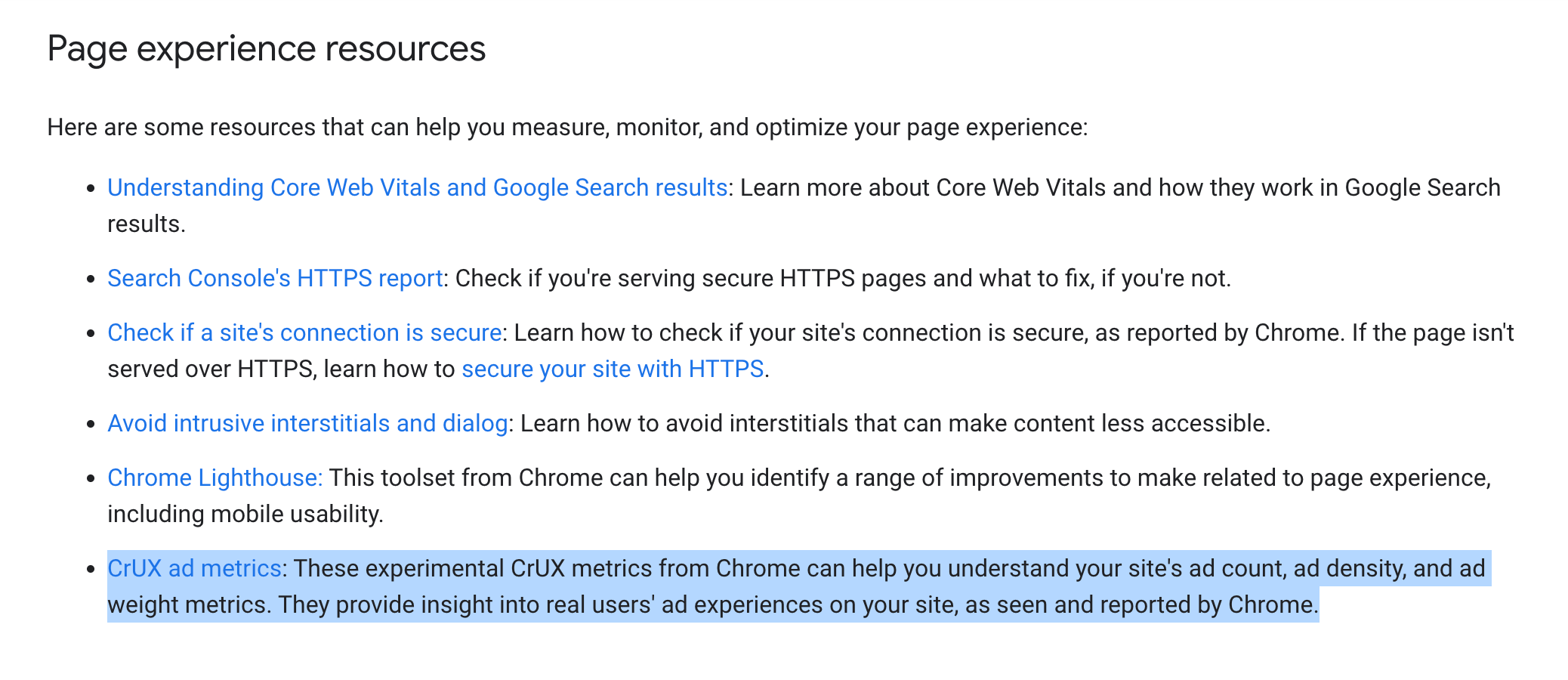
CrUX ad metrics: These experimental CrUX metrics from Chrome can help you understand your site's ad count, ad density, and ad weight metrics. They provide insight into real users' ad experiences on your site, as seen and reported by Chrome.
Here is a screenshot, highlighting what was added:
There has been a lot of confusion and debate on how important or not important page experience metrics are for Google Search rankings. I am not getting into it here but look at my archives. Google has made a lot of wishy-washy statements about the importance of page experience and Core Web Vitals. Google said We don’t confirm any of the things [page experience or core web vitals] as a direct ranking factor - now they confirm core web vitals as a ranking factor. This goes back to the confusion (which is still there despite Google not wanting to believe it) around how the changes to get helpful content guidance and page experience documentation from a year or so ago. Google shortly after that confusion told us page experience is a ranking signal but not a ranking system. Danny Sullivan, Google's Search Liaison, said back then, "It just meant these weren't ranking *systems* but instead signals used by other systems." Google even removed the page experience report from Search Console.
Here is what each new metric measures:
- Ad Count: The average number of ads in the viewport
- Ad Density: The average fraction of the viewport area occupied by ads.
- Ad Weight (Network Usage): The resources consumed by ads measured in bytes.
- Ad Weight (CPU Usage): The resources consumed by ads measured in milliseconds.
Forum discussion at X.