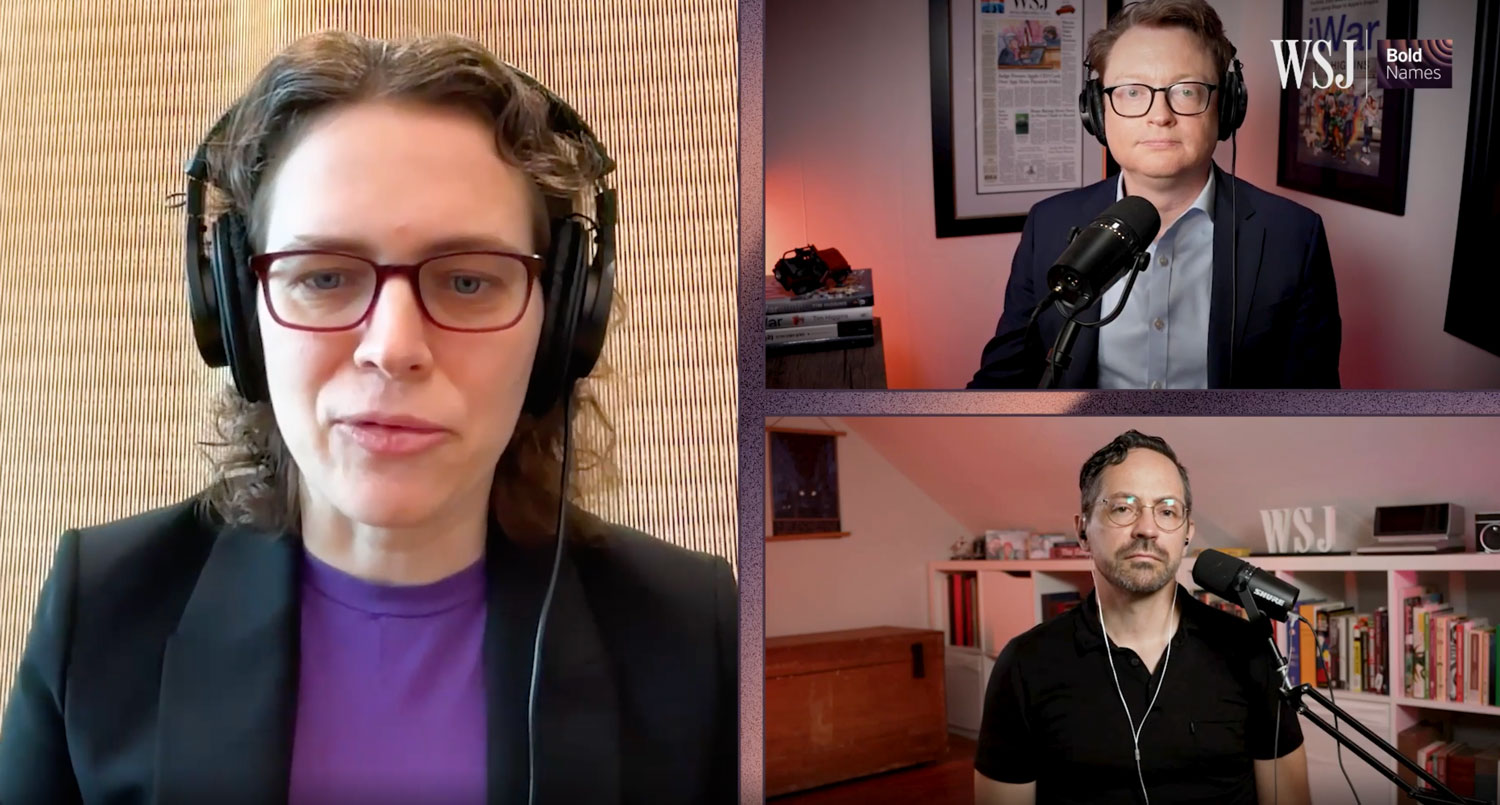
Liz Reid VP, head of Search at Google, was interviewed by the Wall Street Journal's Bold Names podcast. They spoke about AI, AI Search, how ads are impacted by AI results and other Google features, and AI-generated content's impact on the web and search, plus more.
A lot of what Liz said is repetitive to the other interviews she has done already or her colleagues have done. But it is worth listening to or watching.
Here is the video:
I took away these points, but I may be wrong:
(1) Ad clicks have gone down when AI Overviews, Google Lens and other search features are on the page. But those lead to even more queries, which makes up for the difference in ad clicks missed.
(2) Whenever Google changes anything, including rankings, there are winners and losers. But she thinks user-generated content forms may be winning more now because younger audiences prefer it.
(3) AI content is making the web grow faster but not all AI-generated content is spam.
Here is the full transcript if you don't want to watch it:
Tim Higgins: Today on Bold Names, Liz Reid. She oversees Google Search and is something of a Google lifer. Having been there more than 20 years, she has seen some of the biggest moments for this company.Christopher Mims: And now she's overseeing one of the company's biggest transitions ever, the shift to AI. They're dealing with a bunch of competitors, especially in chatbots like OpenAI and Perplexity. It has to do all of this while continuing to make money from advertisements. And throw in our discussion with Liz about the so-called dead internet theory, and I would say this is a doozy of a conversation.
Tim Higgins: Yeah, absolutely, and I can't wait to get into it, but first I want to read a little note. NewsCorp, the owner of the Wall Street Journal, has a commercial agreement to supply content to Google platforms. Now that that's out of the way, let's get into it. From the Wall Street Journal, I'm Tim Higgins.
Christopher Mims: And I'm Christopher Mims. This is Bold Names, where you'll hear from the leaders of the bold name companies featured in the pages of the Wall Street Journal. Today, we ask how does Google Search survive in the new world of AI chatbots and answer engines?
Tim Higgins: Liz, thanks for making the time. You oversee a product that's used by billions of users every day, and you are also involved in this transformation with AI, which I have to think is challenging, uncertain. You've been at Google for more than 20 years, you've seen other new technologies. I'm wondering where this AI moment ranks in that history. Is it the biggest shift yet?
Liz Reid: I do think it's the most profound shift. Certainly, there've been quite a number of big ones. I think the shift to mobile particularly stands out. But for Search, it's an information product and this is a technology shift that is fundamentally changing about information. So the technology shift is sort of most directly connected to the product itself, and I think one of the things that's really just exciting about it is you have a lot of engineers and product managers that have dreamed for years of things they wanted to build. Why can't we do this? Why can't we answer this question? Why can't we make the information available to people in every language? And it finally feels like we have a technology that sort of makes those things possible.
Christopher Mims: I'm glad you mentioned in every language because sort of the less known history of today's large language models, the initial focus for this kind of AI was language translation, and then it turned out it could be used for chatbots. For good reasons, Google didn't release their initial language models. Then in 2022, we had the ChatGPT moment and it felt like it was kind of a hair on fire moment for Google internally. A lot has happened in the interim, Google has "caught up" in a lot of ways, but it also feels a little bit like Google is still catching up. Do you feel like that's the case?
Liz Reid: I can't talk to the company as a whole, but I would say in Search, this is a space where we've been using AI in Search for quite some time. You go back to the time of transformers and we brought in Search with BERT.
Christopher Mims: And BERT being your original one of the transformers language models.
Liz Reid: Yeah, one of the original transformers.
Christopher Mims: Which was incorporated into search results before ChatGPT was even a thing.
Liz Reid: Yeah. Initially, the technology was such that things like latency and quality felt promising, but to the point where we had them sort of more behind the scenes, they were in ranking, they were in sort of small features across, and it's only in the last couple of years that the tech has really been there where you can bring it in a much more forward way to users. I think in Search, we have, to your previous point, about billions of people use this, this is a product that has a sense of trust that people have built over years and we really want to maintain that. I think it's been an evolution in Search over the last several years, but it's exciting to be able to bring it more forefront to the user and unlock new capabilities that way.
Tim Higgins: I think that OpenAI and these other startups are painting kind of a vision for the future where chat AI is the way people find information and learn about information. I have to imagine that you see it slightly different and I'm wondering what you think is Google's edge with its own platform in this kind of AI future?
Liz Reid: Yeah, so I think there's a few aspects of it. I do think this ability to have more conversational, stateful interactions will continue in the future. I think that's very powerful when you're talking-
Christopher Mims: Sorry, could you define stateful for our non-geek listeners?
Liz Reid: Sure. Do we understand what you just said three minutes ago and what you said yesterday and what you said last month, right? If you have a human relationship, you don't feel like every time you meet someone you're meeting someone for the first time. So that's exciting on the tech. But on the other hand, I would say some of these will paint this picture that your future information is only just talk to a model. You're just going to interact with this AI bot and that's all it wants. And what we've seen and what we believe in is there's this great mix of pulling AI to make that information easier to enable these things, but also, people still want to hear from other people. They're not ready to delegate all their fashion advice. All of the things they would previously go to influencers or trusted editorial just to a model, not just based on the accuracy of the data, but also on what makes us human. That this is special to hear from somebody that you connect to, that you relate to, their unique take on something. And so we think about using AI to sort of enhance Search to enable you to get the quick answers, but also to dig deeper around the web. And so we think that's really an important part with Search, that you can continue to actually hear from other people, to hear from other sites and publishers you trust and trying to figure out how we best bridge them together.
Tim Higgins: And right now, users can go on to Google.com and they can see some of this bridge if you will. It's the AI Overview, so it gives you a snapshot of what you're looking for. I've used it many times. You can also go deeper. There's other links there that you can go down the rabbit hole. Though at the beginning, there was some funny faux pas, if you will. I think you get asked about them a lot. I know I remember this one columnist over at WIRED noting that when they were asking it the year, it kept saying it was 2024. Kind of embarrassing, but also, I'm not quite sure if somebody had just woken up and they're like, "I need to go to the AI and ask what year it is, that they wouldn't know what year it is." But whatever, it really gets to this issue.
Christopher Mims: Tim, what are you saying about what I do when I wake up in the morning?
Tim Higgins: I guess it gets to this issue of trust though, right? And knowing the information is correct. Do you think that users are harsher in judging Google when it does this versus some of these other startups where they don't have a personal relationship or they don't have experience with? Or are we making much to do about nothing here? Do the user actually care?
Liz Reid: I think people hold Google to a high level of responsibility, and I think that's a good thing. People really rely on us and we see sometimes that people will go to chatbots and they will come to us to check the answer. Search is a very broad space and people's questions are very broad and some things people really, really care about down to the wire, the exact data, and other things, people just want to get the gist of something. And sometimes what's interesting with these tools is that people aren't using Search or other tools simply just to get the answers. Sometimes they're using it to help them brainstorm, to help them get started. And so if your goal is to get started, not to finish, even if you can't help them all the way, it's better to help them get started and then allow them to figure out where to double-check and to figure out where to go deeper than it is to be like, "Sorry, I'm not 100% sure. So go away and try something else." And so we have to think about that balance constantly.
Christopher Mims: Liz Reid says that users want both AI and human-generated content in Search, but how are things shaking out for publishers in the era of AI Overviews?
Liz Reid: One of the things that's always true about Google Search is that you make changes and there are winners and losers. That's true on any ranking update. That doesn't in any way discount what it means for those individual publishers that are losers.
Christopher Mims: Stay with us. So Search is a big revenue generator for you, but you are changing the nature of Search with these AI Overviews. I mean, in my own experience, they have been getting more accurate. They are extremely convenient. A lot of times when I use them, I don't have to click through on subsequent links unless I feel the need to fact check what the overview is telling me. The data suggests that millions of other people are engaging in the same behavior, so they're not going to the canonical 10 blue links, they're not clicking through. How is this change in behavior from people searching the internet through Google to demanding answers affecting your revenue?
Liz Reid: So actually, the revenue with AI Overviews has been relatively stable accordingly, and the way to think about that is some queries may get less clicks on ads, but also it grows overall queries so people do more searches. And so those two things end up balancing out. Part of the thing to think about is what are the ads? So if the ads are for shoes, you might get an answer on AI overviews, but you still have to buy the shoes. None of the AIs substitute the need for the actual pair of shoes. So you're still likely to click through even if you're doing research initially and then you click through.
Christopher Mims: So sorry, can you walk me through exactly how you said some queries, you're getting fewer clicks. So if I'm just like, "What is the relationship between these two celebrities? Is one the child of another?" I'm looking up nepo babies or something, one of my hobbies. That's not going to get a click through but it doesn't...
Tim Higgins: Another Friday night with Mims.
Christopher Mims: It's that or World War I naval history, okay, Tim?
Liz Reid: So one thing I would say is most queries don't have any ads at all. So your celebrity example probably didn't show any ads in the first place. It probably doesn't show any ads after. And so that query is sort of unaffected by ads. A lot of ads show on more commercial queries and they show for ones where you have often interest in a commercial service. And so in that case, the AI Overview is more likely to be helping give you context, and then you may continue on with an ad accordingly. The AI Overviews, we show ads both above and below AI Overview. So sometimes the AI Overview shows up above the ads, which that's more likely to affect the ad click through. Sometimes the ads show above. But overall, one of the things that's sort of counterintuitive to many people is that the number of searches they will issue is actually not fixed. It's not every question that you think of, you bother to ask. You get a question in your head and you sort of do this very split second calculation, which is like, is it worth me picking up my phone? And so many things you just don't bother to pick up the phone at all for. But if you lower the barrier for getting that information, if you believe that you can get the answer quickly, if you believe you can get it reliably easily, then you'll ask more questions. You think about a very easy example of this is with Lens. If you previously saw-
Christopher Mims: And Google Lens is the thing where you take a picture of something and it searches Google for it.
Liz Reid: Right. Okay. So if you previously saw a great handbag or a beautiful flower on the side of the road and you had to think about describing that with text, no way were you going to figure out how to do that unless you were extremely motivated. So you just let it go. But then you have Google Lens and you ask the question and you get an answer and so you start asking more questions. We saw this with AI Overviews as well. That ease of being able to ask a question, that ability to ask a question where maybe the information wasn't on any single web page, but it was across multi-web pages that lowered the bar for people. And so people started doing more searches. And so the increase in searches sort of compensates for the impact on ads collect such that we end up roughly at the same point.
Tim Higgins: Mm-hmm. And ad revenue's actually been up. You're painting a very rosy picture here that things are well. I mean, that's your job. But on the flip side of that, I think it can be confusing out there in the marketplace because part of the success of Google Search is that it's seen as this very big player, some would say a monopoly. In fact, a federal judge has ruled that way.
Speaker 4: ... Google here. And this judge found that there were basically two areas where Google was basically engaging in antitrust.
Speaker 5: That suit involves its core business, online searches.
Speaker 6: Google currently controls roughly 90% of the world's internet searches.
Tim Higgins: In getting into the remedies part of that case, in some ways, it's seen as Google being given a reprieve in part because this federal judge, and I want to quote from it, he's looking at the case for Search for Google, and he said "The emergence of generative AI changed the course of the case." And in fact, one of your partners, Eddie Cue at Apple, he had some testimony that contributed to that decision, this idea that Google's place in the world with Search was slipping because of the threat of AI and so-
Christopher Mims: Yeah, based on data from searches within Safari, I believe. He said those searches were going down.
Tim Higgins: So what are the stakes? Are the stakes as high as the judge would be making it that Google's at this kind of precipice of potential failure or is Search having a bright future?
Liz Reid: So I think there is more competition than ever before for sure. And also I think Search has a very bright future. I think this is really an expansionary moment where the number of people who will ask questions, the amount of questions that people will ask overall everywhere is growing tremendously. And so both Google can grow very successfully and other people can grow successfully. It's not sort of this one or the other zero-sum game in the same way because people sort of assume these things are zero-sum, but actually, because making these things easier causes people to ask more questions, to bring more of their needs, to get more help to take that project, that felt a little overwhelming. And they were like, "Oh, I'm never going to get to that. I don't have enough time." And suddenly feel like they can embark on it. Then the whole space grows and lots of people can grow at the same time.
Tim Higgins: It's interesting, I hear what you're saying about the idea of growing the pie, that everybody's looking for information. I think when I look at some of your rivals, they want to grow the pie, but they want to eat all the pie. I mean, some of these ideas, it's like you have your personal assistant who's just you're going to be asking questions and feeding, and that's going to be the ecosystem you live in. And that's like a different vision of the world than we have currently. And I just wonder if in some ways, Google faces the innovator's dilemma, right? You've got a foot in the old Search business, evolving it, but also getting into the chat kind of mentality of how you interact with information. When you look over the history of industries that have dealt with really disruptive change, sometimes when they deal with the straddling or the hybrid approach, they get left behind, right? We can go through a whole list of them. I wonder if that is the moment you're in or do you see it differently?
Liz Reid: Well, I think there's a couple of things I would say. One, Google Search has handled many transitions. People ask similar questions when the time of mobile came. Like, oh, will you actually be able to have an ads product in the mobile space, the phone is so small, you're such a desktop product, are you're going to be able to transition? And it actually proved very healthy for us. I think in general, things for which the tech changes play very well to Google's strength. I also think Google has multiple things in the space. We have both the evolution of Search and we have Gemini, which is sort of more of a chat app from its origin across. That's a different version of straddling, is to ensure that you both evolve your mainstay and you disrupt yourself from within and use that together to tackle the new challenges ahead.
Christopher Mims: There have been multiple reports that since Google launched AI Overviews, click throughs have fallen. Now, you talked earlier about your aggregate data. You aren't seeing this phenomenon as far as I understand it, but I've talked to individual publishers who said that with the last algorithm update, they saw traffic drop 45%. Are we conflating two things here because Google does regularly update the search rankings and the sort of underlying algorithm that determines where publishers are going to be and how much traffic they're going to get? Or is it that while you're seeing overall click-through rates in aggregate for Google stay the same, for individual publishers, it's spiky and there are winners and there are losers in the AI Overview era?
Liz Reid: So I would say a couple of things. One of the things that's always true about Google Search is that you make changes and there are winners and losers. That's true on any ranking update. That doesn't in any way discount what it means for those individual publishers that are losers. But the other thing that's going on is there's a behavioral shift that is happening in conjunction with the move to AI, and that is a shift of who people are going to for a set of questions. And they are going to short-form video, they are going to forums, they are going to user-generated content a lot more than traditional sites. This is particularly true with younger users. They're going to podcasts-
Tim Higgins: Thank God.
Liz Reid: Rather than reading the long article.
Tim Higgins: Bold Names, where you get your ideas.
Liz Reid: So people have searched on this, and this is particularly with youth, they show this even more. And they do that at some level for news, but often for things that the world doesn't necessarily think of as hard news, but publishers are used to thinking about. Where are you getting your lifestyle advice? Where are you getting your cooking? Are you getting your cooking recipes from a newspaper? Are you getting your cooking recipes from YouTube? And so there's all these underlying dynamics as well. And we are seeing a shift that is people going to more of these forums, user-generated content, short-form video, audio, podcasts, and that is coming at the expense of some other more long-form traditional web. And so that's oftentimes what people are seeing. You can say in an aggregate, an individual publisher could be affected by any number of different factors going on. Maybe there was a different publisher that was higher ranking, maybe users change. But we do have to respond to who users want to hear from. We are in the business of both giving them high quality information but information that they seek out. And so we have over time adjusted our ranking to surface more of this content in response to what we've heard from users.
Christopher Mims: So to be clear, there's a push and there's a pull. So the pull is users want more of this kind of content, short-form video. Let's use that as a shorthand for all the different types of media that you just named. But there's also a push. You're changing your algorithm because you see the trend going there?
Liz Reid: You see it from users. We do everything from user research to we run an experiment. And so you take feedback from what you hear from research about what users want, you then test it out, and then you see how users actually act. And then based on how users act, the system then starts to learn and adjust as well.
Tim Higgins: Will the internet be consumed by AI-generated content? After the break, how Google's efforts to eliminate spam shape its approach to keeping the AI slop at bay.
Liz Reid: It is hard work, but we spend a lot of time and we have a lot of expertise built on this such that we've been able to keep the spam rate of what actually shows up down. And as well as we've sort of expanded beyond this concept of spam to sort of low-value content.
Tim Higgins: That's next. I think one of the biggest fears among publishers and these independent creators out there is that they aren't going to survive this kind of coming change. And then I guess what happens? What happens? Who's fueling those AI Overviews at that point? Do you guys talk about that inside of Google? What's the kind of conversation about the future of where information will come from if some of these established pillars go away?
Liz Reid: So I think from the Search side, we really care about the health of the web more than anybody else. It is essential not simply for AI overviews, but for the product. So what we spend a lot of time thinking about is how do we surface them effectively in this world of AI? How can you continue to innovate and understand what it is? We've started doing more with inline links that allows you to say according to so-and-so with a big link for whoever the so-and-so is. We could say according to Bold Names, here's what they have to say. And then click throughout, right? Building both the brand, as well as the click through.
Tim Higgins: The bolder, the better, in my opinion.
Liz Reid: Yeah, we'll make sure we put Bold Names in big, bold fonts as well, of course. So continuing to think about questions like that. Are there ways that we can surface videos in new ways within some of these experiences if people are interested in videos across? Another thing we've been doing recently is working on more personal features. So we did something with Top Stories, we did something with Discover, allowing you to say, these are the sources you most trust. So if you have a subscription to somebody, can you get their articles at the top of your Top Stories by selecting that? If you have particular people you love to follow. So that we can strengthen the connection between sites and creators and the audiences they like and really make it easier for them to access that content.
Christopher Mims: Are you familiar with dead internet theory?
Liz Reid: I have not heard that specific phrase before, although I feel like I've heard a lot of phrases, but go ahead.
Christopher Mims: Dead internet theory is that most of what's on the internet is already AI-generated, because that's what people will click on, and that's what we'll rank. And no one can really distinguish AI-generated content from human-generated content I guess outside of video. But even there, I don't personally believe this is where we are now. It does feel like it is a warning about where we could go though. And I wonder if you are at all concerned that the health of the web, the web could remain healthy and that people will still search, but it could be unwell in the sense that more and more of it is essentially AIs training on themselves and that the content you're directing people to because of the erosion of other parts of this ecosystem that you've created that people depend on. Are you concerned about that at all?
Liz Reid: I think it's very important that we continue to surface high-quality content. The web is extremely big. You're right that AI-generated makes it even bigger. And so we've worked for years on this question about how do you get rid of spam? Now, AI-generated content doesn't necessarily equal spam, but oftentimes when people are referring to it, they're referring to the spam version of it or phrase AI slop, right? This content that feels extremely low value across, and we really want to make an effort that that doesn't surface. Now, you can have a beautiful AI-generated with an artist image in response to home decor inspiration ideas, which I wouldn't consider AI slop. I would consider just a tool like Photoshop to go create it. That may still be great to surface it, somebody created it. But what we see is people want content from that human perspective. They want that sense of what's the unique thing you bring to it? And actually, what we see on what people click on on AI Overviews is content that is richer and deeper, that surface-level AI-generated content, people don't want that because if they click on that, they don't actually learn that much more than they previously got. They don't trust the result any more across. But so what we see with AI Overviews is that we sort of surface these sites and get fewer what we call bounce clicks. A bounce click is like, you click on your site, "I didn't want that." and you go back. And so AI Overviews gives some content and then we get to surface sort of deeper, richer content, and we'll look to continue to do that over time so that we really do get that creator content and not the AI... Now, it is hard work, but we spend a lot of time and we have a lot of expertise built on this such that we've been able to keep the spam rate of what actually shows up down. And as well as we've sort of expanded beyond this concept of spam to sort of low-value content, this content that doesn't add very much kind of tells you what everybody else knows, it doesn't bring it and tried to upweigh it more and more content specifically from someone who really went in and brought their perspective or brought their expertise, put real time and craft into the work.
Christopher Mims: So wait, I have to follow up and show my age here because I think one of my first blogs was on Blogger. Are you telling me that we live in an age when content creators can be creating deeper, longer, better research, more personalized content, and that that is what people want? I mean, I guess you've also said what they really want is video. Are you saying that we live in a golden age of extended YouTube essays essentially?
Liz Reid: So I think depending on the topic, deep may mean different things. We do live in an era of four-hour podcasts, which was not true 5, 10 years ago in the same way. So in some sense, people are willing to engage... They're not necessarily willing to engage on every topic they have. They may have one question in which you've got three minutes. And what's interesting about AI is that it becomes easier to match people. So if I go really back in time, the web felt like it was kind of all this leaf content when it first started. This was the world of geo cities and other people would create these things and you'd find this community and you'd feel connected. And then the web got really big and you would use pretty vanilla keywords to go look things up. And because you've got vanilla ones, you would just look for the recipe or the topic and you'd get the sites that were sort of most popular overall, you get in the equivalent of the most popular brands in shopping. But if you now can say instead of like, I want a dress for the wedding, I want a dress for the wedding that is made by a merchant with the following values and is also read and is short in the... Now, you can express that. That allows us to find that niche merchant in a way that would not have been possible with AI. And so what AI unlocks is that ability for you to express what you really care about. And what you really care about is probably different than what Tim cares about for the same topic.
Tim Higgins: You'd be surprised.
Liz Reid: Maybe not. Okay, I'd be surprised. Okay, you two are identical people on the thing. Okay, what I care about, Chris' selection of shoes is probably not my selection of shoes. And now, we can express that in richer language and find that richer merchant. But that's also true for that richer creator or influencer. But the fact that human diversity is very broad means that if people can actually express what they want, we can actually connect people in a new way.
Tim Higgins: You've said that the Google, the future of it is taking the legwork out of searching. And I wonder what happens to these skills though of learning and acquiring knowledge that we've kind of built up using Search in the past. Now AI is going to help it find information faster or differently.
Liz Reid: Yeah, so it's definitely a question I think about a bunch. I think some version of your question could be asked about the internet instead of books, right? Like, oh, my gosh, it's an internet. You could just type this in, this means you don't know how to use the card catalog. It doesn't mean you can't read a book, you're just going to read a quick web page instead of going through the book and sourcing it. You could say the same about this general question about like, oh, well, instead of going to one web page, now I'm going to get the summary and then I'm going to dig in deeper. Okay, well, what happens? Do you stop at the question or do you learn more? Do you dig in deeper across? And so I think if we do it right, there's the things that you never wanted to spend time learning about. And those things, you don't practice the skills on. But the things that give you joy and passion and you do want to learn more about, it now feels more tractable. One, because you don't have to spend the time on the other stuff, but two, because it's not as daunting. I have a child with special needs and I try and figure out, okay, what can I learn more about how to help her? How do I coach her? How do I get support and services? At the end of the day, I got three kids and a job that keeps me somewhat busy, and I can be kind of tired at the end of the day. But if it feels like I can get started and I can get help, it's like having somebody help you learn something. It doesn't replace the need to learn, but it's kind of nice to have a tutor to help you on tough topics.
Tim Higgins: Well, Liz Reid, thank you so much for giving us some time today. This was a wonderful conversation.
Liz Reid: Thank you. Appreciate you having me.
Forum discussion at X.