
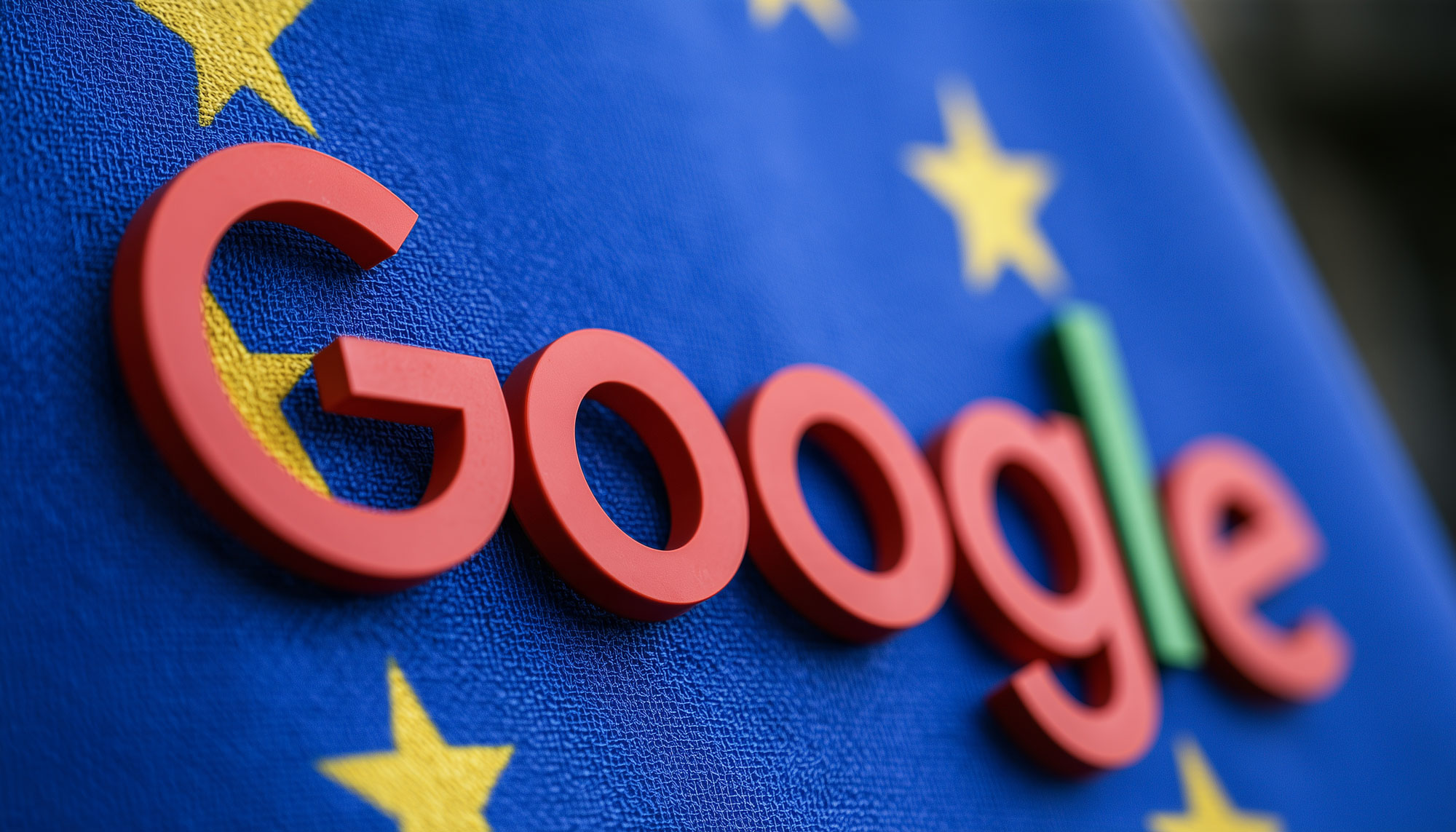
Google has officially appealed to the European Union to stop the European Commission's Digital Markets Act (DMA) mandate requiring it to share search history data with competitors. Google said, "We're appealing decisions that will force us to share people's private search history without sufficient anonymization and weaken vital security protections on Android."
In June, Google was mandated to allow users to port their search data to authorized third parties, such as rewards platforms or companies offering personalized offers or discount codes.
Google said Tuesday that it filed appeals with the General Court of the European Union, the bloc's second-highest court, against decisions that gave Google a January 2027 deadline to share search data and a July 2027 deadline to make changes on Android.
"We're appealing decisions that will force us to share people's private search history without sufficient anonymization and weaken vital security protections on Android," Oliver Bethell, Google's senior director of competition, said in a statement.
Companies that fail to comply with the DMA can be fined up to 10% of annual global revenue, or up to 20% for repeated infringements. The EU can also impose periodic penalty payments of up to 5% of average daily sales.
Google recently opened up a licensing dataset program where you can apply to get this data.
Nick Fox, SVP, Knowledge & Information at Google, said in a recent interview:
The other part of the DMA is that it’s about to cause a really massive violation of European privacy. There’s a part of the DMA that’s going to require us to hand over user search queries to competitors, which could be any number of companies, and they’re actually typically not European companies, so it doesn’t actually enable European competition in a meaningful way. But if you think about it, what we were talking about before, the questions you bring to Search are the most private questions you ask anyone. You bring to Search questions that you don’t ask your spouse, you don’t ask your friends, you don’t ask your doctor. These are very private questions about your health, your finances, any number of things. And for those queries to be taken outside the four walls of our data centers, where we invest an enormous amount of money in securing our data centers and protecting against hacks and cybersecurity and all of these things... Once those queries are taken outside of Google and handed over to others, they’re subject to hacking and any number of things. So there’s a real risk there that I think needs to be better understood.
There is more coverage of this on Techmeme.
Forum discussion at Bluesky.