With Google Ads releasing AI Max globally back in September, more and more advertisers are trying it out. While some of the early data can show it underperforms, some are seeing success by using it for specific applications. That being said, one recent study showed that using AI Max helps broaden your work with exact match and phrase match keywords.
Mike Ryan posted on LinkedIn that AI Max, "effectively "broad-matchifies" exact match and phrase match keywords."
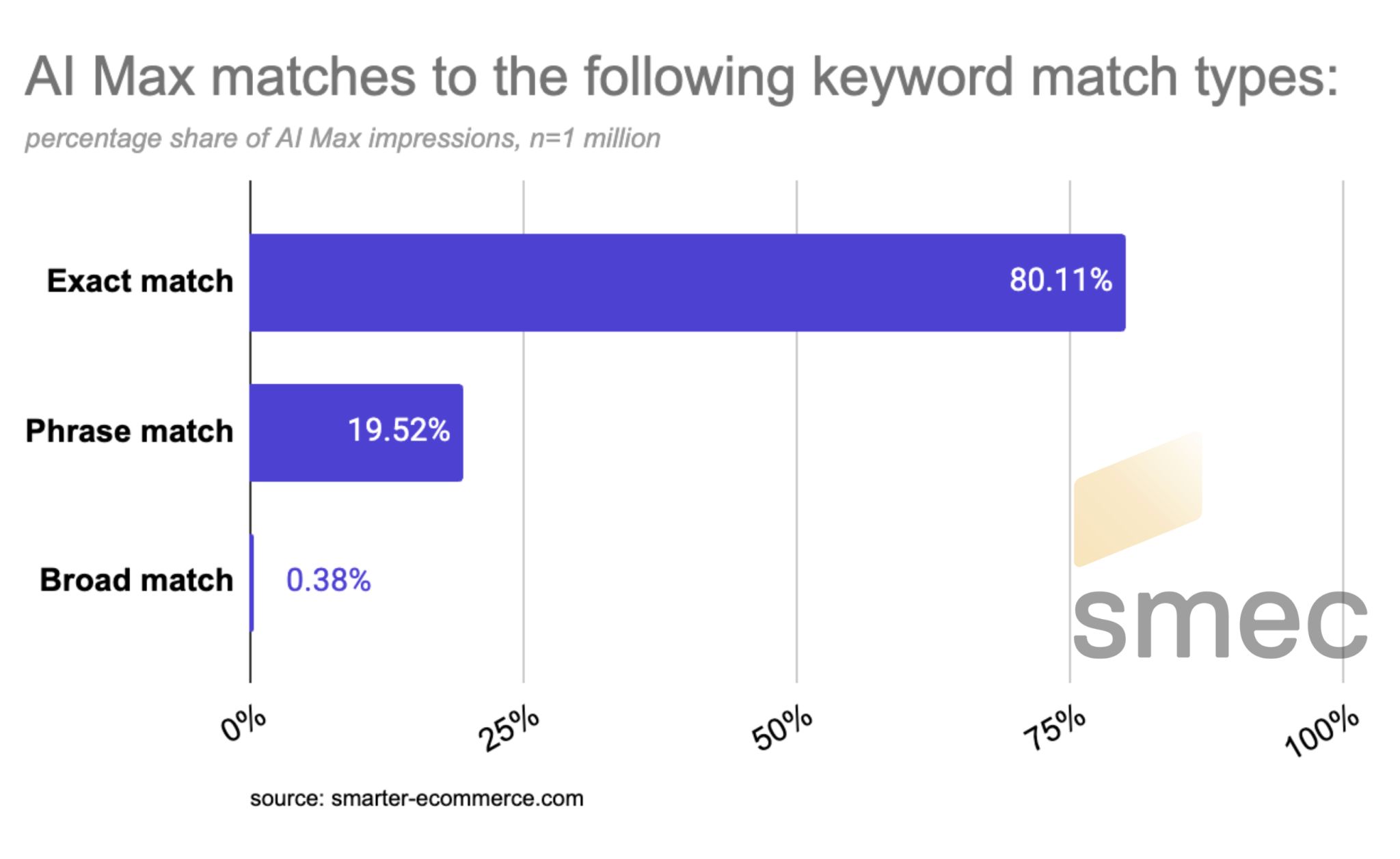
He looked at one million AI Max impressions in his Google Ads campaigns and said, "My hypothesis here is that advertisers often use exact match keywords for their own brand terms, and then AI Max comes along and says "Aha! This other term is broadly related!" Yet, that other term is categorically different: it's a competing brand."
He shared this chart showing how Al Max matches to the following keyword match types:
He wrote:
You can really see this come to life in the chart below, where exact match and phrase both get broadened by AI max, whilst broad match isn't affected at all – because it's already broad. This also aligns with Google's statements that campaigns & accounts which rely heavily on exact match will see the strongest volume uplift. AI Max search term matching is rather starved of opportunity to find new impressions if broad match is the dominant targeting model.
He also dug in more and explained:
I also looked at the range of typical outcomes. Here I learned that exact match expansions usually accounts for between 27% and 89% of AI Max match type impressions. The 80% average below skews a bit high in that range, but ultimately the results observed in any given campaign will depend on the specific keyword match strategy and keyword volumes.
Forum discussion at LinkedIn.