OpenAI seems to have removed or replaced the UTM parameters it placed on links within the ChatGPT results. This makes it harder to know if a click came from ChatGPT versus some other platform. This seems to have started with the release of GPT‑6, which was a week ago.
As a reminder, in June, OpenAI added UTM tracking to ChatGPT links, but now, in October, those were removed. We are not sure if it was directly intentional but Cedric Huesler from Adobe posted on LinkedIn saying, "GPT-6 opens links with window(.)open(url, “_blank”, “noopener,noreferrer”) and drops ?utm_source=chatgpt(.)com. There’s no tag and no referrer, so your analytics files the visit under direct."
Meaning, ChatGPT has changed how it passes the referrer to the website the referrer is coming from.
He shared this chart showing the drop-off in tracking:
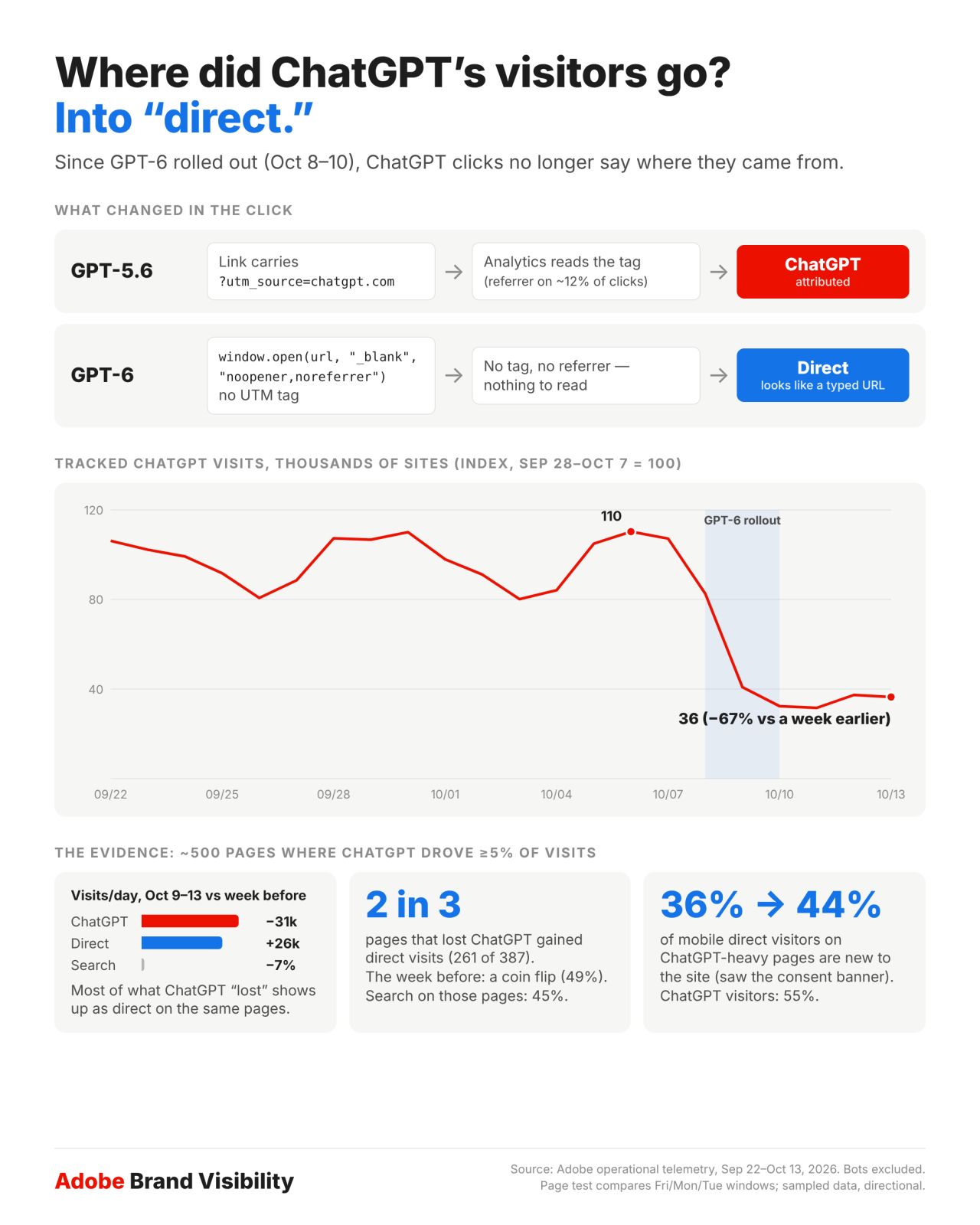
Cedric added, "To check, I looked at ~500 pages where ChatGPT drove 5%+ of visits, comparing Oct 9–13 with the week before:"
- ChatGPT: −31k visits a day. Direct: +26k a day on the same pages. Search: −7%, the same as everywhere else.
- Direct rose on 2 in 3 pages that lost ChatGPT traffic. The week before it was a coin flip, and search on those same pages rose on only 45%.
- The new direct visitors behave like ChatGPT visitors. On mobile, the share seeing the consent banner (new to the site) went from 36% to 44%. For ChatGPT visitors it’s 55%.
Others are complaining about this too:
@fomerino @lilyraynyc @CyrusShepard @rustybrick Since octobre 9th I also see a sharp drop in Chat GPT human traffic, and also a drop of Chatgpt-user robot traffic. OAi Search bot traffic has increased in the same time (sinc october 7th be precise). Am going to investigate the utm parameter.
— Sébastien Billard ✊Ⓥ🇺🇦 (@sbillard) October 14, 2026
Hat tip to Chee Lo who told me about this a couple of says ago.
Forum discussion at LinkedIn.