Google updated how it handles sending searchers to AMP pages within Google Search. Now Google will send searchers directly to publisher-hosted AMP pages instead of the cached pages displayed in an AMP viewer. Google said this was done because it "simplifies and reduces maintenance efforts for publishers who are creating AMP content."
"Starting today, we are updating how we connect users to AMP pages from Search, taking them directly to the AMP host pages," a Google spokesperson told me.
"AMP content will continue to rank just like any other webpage, and this change will reduce maintenance efforts for publishers creating AMP content," the spokesperson added. There is no impact on how AMP pages are ranked or served in Google Search and Google Discover.
Google added that you "no longer need to update the AMP cache or configure signed exchanges."
With that, Google updated its AMP documentation, Google added these two new sections at the top of that page:
About AMP on Google SearchGoogle Search indexes AMP pages just like other web pages, and applies the same standard to all pages, regardless of the technology used to build the page. This page covers how AMP pages appear in Search results, guidelines for using AMP with Google Search, and common questions about AMP and Google Search. For more information on the benefits of using AMP, see the AMP Project success stories.
How AMP pages can appear in Search results
AMP pages can appear in Google Search as a rich result, just like other pages on the web. To help Google better understand your page, you can add structured data to your page. Adding structured data doesn't guarantee that your page appears as a rich result in Search results. For more information, refer to the Structured Data General Guidelines.
AMP pages can also appear as Web Stories. Learn more about how to enable Web Stories on Google Search.
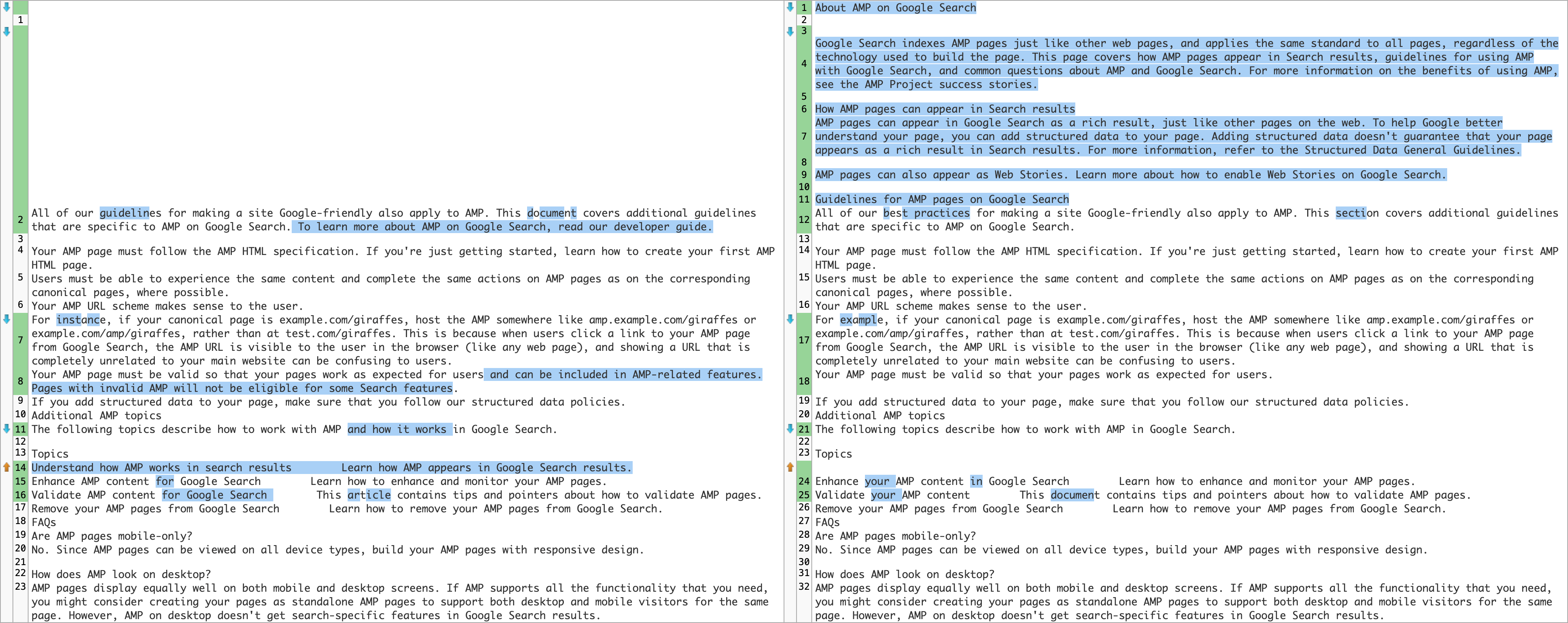
There are other miscellaneous changes, here is the comparison comparing the new to the older version:
Google also made similar changes to the wording on these three AMP related help documents (and also redirected some older AMP docs to the main doc listed above):
Direct to publisher AMP pages now, no more AMP cache. Makes sense since many publishers have removed AMP over the years. There are still some sites using it, but my guess is that will continue to drop heavily over time. https://t.co/bxKiZV9nCi
— Glenn Gabe (@glenngabe) July 1, 2026
It is weird writing about AMP in 2026 but hey, there was this change made.
Forum discussion at X.
Quickly tested an AMP url this morning from the Google Search app. Ouch, not good. It worked from Chrome, but not the Google app. Others are working ok, so maybe just an anomaly. But still not good. :) https://t.co/rwSN46Vto3 pic.twitter.com/RB3cycZvqH
— Glenn Gabe (@glenngabe) July 2, 2026