

Google has updated the Google Ads help document on About reporting in AI Max for Search campaigns with a number of changes. The changes include documenting the DSA to AI Max deadline, more information on how to understand the report, a new section on navigating and interpreting Search Campaigns for Travel performance reports, and updates to focus on intent and getting regular reviews.
This document had a lot of changes; here is the archived version from last September - here are the changes I spotted:
- Added: "To help more advertisers access the benefits of AI Max, starting in February 2027, campaigns using Dynamic Search Ads (DSA) will automatically be upgraded to AI Max. Learn more about Upgrading to AI Max."
- Added: Added to the search terms report section, "It shows you where customers are directed when they click on your ad."
- Added a new section to the "Understand your performance report" area saying "By default, it'll display the landing page view of the report. In the top right corner, you can toggle between different views of the search terms report. You can view your campaign’s performance by:"
- Search terms
- Search terms and landing pages from AI Max
- Search terms from Dynamic Search Ads
- Search terms and landing pages from Dynamic Search Ads
- Added new section named "How to navigate and interpret your Search Campaigns for Travel performance reports." It reads: "To help evaluate your metrics in Google Ads, Search Campaigns for Travel’s reporting unifies fragmented data in a single performance report. You can review cohesive performance details, like search term reporting, across multiple levels of your account. To help evaluate your metrics in Google Ads, Search Campaigns for Travel’s reporting unifies fragmented data in a single, cohesive view across multiple levels, like search term reporting. Because Search Campaigns for Travel merges AI Max with your data feed, success is measured by how effectively your specific inventory converts."
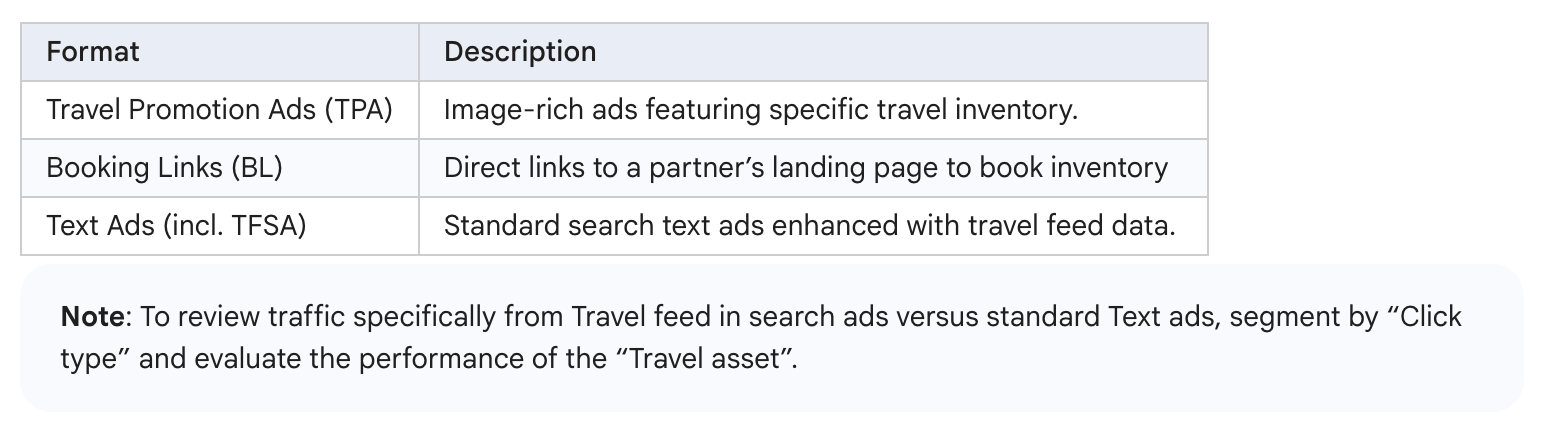
- Added also to that section, "Format performance: Travel Promotion Ads, Booking Links, and Travel Feeds in Search Ads. Search Campaigns for Travel allow you to run multiple formats within a single campaign. You can segment your reports using the "Ad format" column to compare performance across:
- Best practices section was updated to read, "To make the most out of your reporting metrics, consider the following:"
- Focus on Intent: Prioritize driving conversion goals over strict keyword relevance. Search behavior in travel is varied and high-volume.
- Regular Reviews: Evaluate search terms and item group performance every 1-2 weeks.
- Negative Keywords: Use negative keywords sparingly. Only add them when a term consistently underperforms against your goals across all campaigns. Overusing them can limit the benefits of intent-based targeting.