Search Engine Strategies 2006 San Jose Archives

SES San Jose 2006 Quick Link Recap

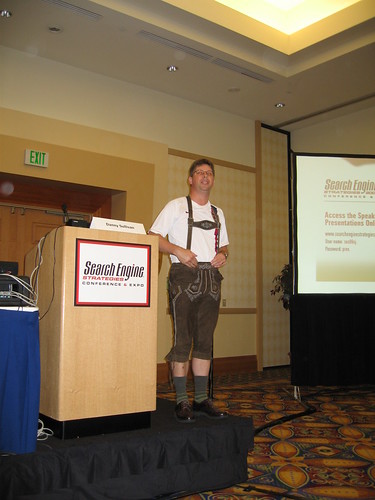
IMG_2742.JPG We have completed an other *somewhat* successful quadruple coverage of the SES conference. Huge thank you to Benjamin Pfeiffer of Rank Smart, Chris Boggs of Avenue A | Razorfish and Lee Odden of Top Rank Results.

We have covered a whopping 38 sessions, would have been 39, but for some reason, I lost one. I would like to personally apologize for any mistakes, omissions, grammar issues, if it is hard to read and if we insulted anyone. The coverage is meant to be extremely quick but with that comes issues. Anyway... Here is a recap of the sessions we have covered...

Monday, August 7th, 2006:
+ Social Search Overview: Yahoo!, Windows Live & Eurekster
+ Compare & Contrast: Ad Program Strategies
+ Searcher Behavior Research Update
+ Social Search: Up Close With Yahoo!
+ Leveraging Social Media (MySpace, YouTube, & Other Social Networks)
+ Does Demographic Targeting Matter?
+ Social Search: Up Close With Google (Google Co-op)
+ Communicating With Customers
+ Searchonomics: Serious & Fun Stats
+ Search and Branding
+ SEM Via Communities, Wikipedia & Tagging
+ The Search Laboratories
+ Domaining & Address Bar Driven Traffic

Tuesday, August 8th, 2006:
+ Can You Please Them All? (Google, Yahoo!, MSN & Ask.com)
+ Auditing Paid Listings and Click Fraud Issues
+ Reputation Monitoring & Management
+ Search Arbitrage Issues
+ Duplicate Content and Multiple Site Issues
+ Blog and Feed Search SEO
+ The Bot Obedience Course - New Yahoo! Site Explorer Tool Announced
+ News Search SEO
+ Search Algorithm Research
+ Search Engines: Friend or Foe?

Wednesday, August 9th, 2006:
A Conversation With Google CEO Eric Schmidt
+ Big Site Big Brand SEM
+ Linking Strategies
+ Big Ideas For Small Sites & Small Budgets
+ When Search Engines Do Search Marketing (AOL, Business.com, Yahoo! & Local.com)
+ Link Baiting & Viral Search Success
+ Usability & SEO - Two Wins for the Price of One
+ SEM for Non-Profits & Charities
+ Pricing & Contracts For The Small SEM Shop
+ The Vice Presidents Of Search Marketing

Thursday, August 10th, 2006:
+ Search APIs (Yahoo! Developer Network, YSM API, Google AJAX API & AdWords API)
+ Vendor Chat on Measuring Success
+ Search Engine Q&A On Links (Ramez MSN Search, Kaushal Ask.com, Adam Google & Rajat Yahoo!)
+ Balancing Organic and Paid Listings
+ Organic Listing Forums (Danny Sullivan In Costume)

posted rustybrick in Search Engine Strategies 2006 San Jose at August 11, 2006 12:00 AM Comments (5)

Organic Listing Forums (Danny Sullivan In Costume)

Yea, last minute change in coverage. Why? because, well, Danny is doing a "short presentation before we begin." He lost a bet with Thomas about a World Cup soccer deal and he had to put on, well this...

IMG_2742.JPG

Danny then warns the folks that the search engines are listening so be careful what you say.

I am only going to cover questions that are interesting, IMO... Otherwise, I will just relax. So you know, I just found out one of the sessions I covered was not posted and it was lost. The Search Engine Bloggers sessions with Matt Cutts, Gary Price, Nile and Jeremy Z. Sorry about that, it was a pretty cool session.

Q: What is the next big component of the algorithm?
A: Dave Naylor said it will be the same, link analysis.
Mike Grehan said user behavior. Citation analysis is more like peer review these days.
Todd Friesen said overall nothing has changed, you can overload certain things and boost yourself to the top. It is still just linking and we have a lot of time left.
Bruce Clay you will see a wide spread use of complementary tools, what do you I mean I search for "java"...
Dave added, looking at the AOL data, and he saw such random searches based on the persons token ID, personalization is sooo hard, he said.

Dave says I would like Yahoo to add to Site Explorer to add a way to say, hey, I don't want that link. A way to discredit the links pointing to you.

posted rustybrick in Search Engine Strategies 2006 San Jose at August 10, 2006 4:40 PM Comments (5)

Balancing Organic and Paid Listings

Balancing Organic and Paid Listings

Moderated by Alex Bennert from Beyond Ink

Peter Hershberg from Reprise Media
Overview of paid and organic. Will talk about how they can be used effectively in combination with each other. Says that organic clicks represent 75% of total clicks. Organic listings are basically an impartial endorsement of the pages. This is a long term solution. Front loaded cost required for SEO. Huge impact on site traffic. Paid search takes the remaining clicks. Also has benefits. Can control messaging and placement, on demand. Broad distribution channels if syndicating results and/or using contextual opportunities. Performance pricing.

Organic + paid equals lasting impact + immediate results. Goes though some more explanation. 5 out of 6 consumers do not understand the difference between organic and paid. They have seen that paid search enhances organic listing when same site has both top listings. Gets into some examples of integration. They see benefit on the publishing side. Lifecycle of a news story: published, blogged, then searched. You can target during each part of the cycle. Paid search for published, con textual ads for blogs and news outlets, and organic for searched. Does another example regarding a news story of the California heat wave and how they did creative for cnn.com paid listings. One more example: Hezbollah news. Nice to get different types of results, such as specific info an recent crisis in paid area vs a longer history of Hezbollah in organics.

Speaks then briefly with some more examples including a branded search and some entertainment searches. They think analytics are the most important bridge between paid and organic, and they use a software that can tell the difference between them. They can optimize against top paid performers, and use organic results to refine keyword list. Suggests that everyone give a lot of consideration as to how the two tactics can work together.

Craig Hordlow from Red Bricks Media, LLC.
Fact: when searchers see a website listed both organically and paid, they are more likely to click to a site. Could give “SEM Commandments,” but this isn’t why he is here. Wants to recommend people put aside the dogma. The above fact is actually unimportant, because there is no mention of goals or cost. Goes into some biology stuff and compares “Le Chatelier Principle” to search. To compete, you have to have a superior process and technology. Recommends using “A.R.P.” Accountability, Reporting, and Process. Accountability discusses how to structure search programs players. There can be problems with accountability both with in-house and agency. For example, business units might compete against each other in an in-house scenario. Talks about how many in-house will be Jack(ass) of all trades. Recommends asking proper questions like conversion goals, responsibility for overseeing? Show an example of a kw you are pursuing in SEO since PPC goals are not being met. Goals should be clearly articulated.

Create goals at the keyword level. Use reports that show the synergies between SEO and PPC efforts. Shows a “keyword portfolio analysis,” which is a Spreadsheet with common metrics and KPI’s for both SEO and PPC. Goes though a variety of interesting scenarios with one outperforming the other. Recommends that you be wary of using multiple vendors for reporting. Goes into the importance of keyword level reporting. Need to have a “line item of action items.” Begin report with a recap of action items. Conclude with a summary of action items assigned to each individual. Conclusion is that the Internet will require you to manage your marketing with increased efficiencies.

Abu Noaman from Elliance
Paid versus Organic: Deciding which to Use and When. Tells of speaking to a couple of the presenters and finding out that even senior mangers do not rally know right off-hand how they divide budgets between SEO and Paid Search. He finds that most of their clients spend about 10% of their overall marketing budget on Internet. Senior marketers want to be able to structure “fair amounts” of budgets on and offline. How much should you be spending on paid versus SEO? Will give an overview on how they approach this.

Typical challenges faced determines the allocation of budget. Some problems include: excess inventory, timed offers, product launch, site launch, customer acquisition, brand awareness, retention. Some of the questions are more long term than short term. So these goals will help determine the budgeting between SEO and paid. Clearing inventory, for example. They go 75% PPC and 25% sponsored links. Timed offers: 25% SEO, 50% PPC, and 25% “ePR” (online buzz). Product launches: 20% SEO, 40% PPC, 20% ePR, 20% sponsored links. You need more balance in this situation. Site launch: 15%ePR, 10% links, 50% SEO, and 25% PPC. Customer acquisition: 30% SEO, 40% sponsored links, 10% each links, ePR, and PPC. Once again, need a well balanced portolio for acquisition over long term. Brand awareness is 25% each SEO, ePR, Sponsored links and PPC. Retention: looking for reassurance of purchase. 40% ePR, 10% PPC, 50% SEO.

Does a short case study…have to go now. That’s all folks! See you in Chicago for the next SES coverage.

posted chrisboggs in Search Engine Strategies 2006 San Jose at August 10, 2006 4:26 PM Comments (0)

Search Engine Q&A On Links (Ramez MSN Search, Kaushal Ask.com, Adam Google & Rajat Yahoo!)

Ramez Naam from MSN Search has two slides. Links are for three things, (1) discovery (what pages exists), (2) reputation (how important is this page) and (3) annotation (what is this page about). What are good principles of links? Offer links in your pages that are useful to your users. He said use shorter and more readable links. He said use descriptive links. He said make sure your link navigation is useful. Search engine algorithms change rapidly, so use these principles, because those will help 6 months down the road. Giving specific help now may not help tomorrow, so principles are key.

Kaushal Kurapati from Ask.com is now up. He shows the general link analysis slide with A pointing to B point to C, etc. Then he shows the community, Teoma, link analysis approach with hubs and authorities within communities. Global popularity... Clustering techniques to cluster these links.... All links are not equal... Be cautious of reciprocal links and purchasing links (it is like buying votes or reviews). Avoid link farms, cloaking, hidden links and links in images are not understood. Become an authority on your subject, focus on your business and content...

Adam Lasnik from Google (minimatt) without a presentation will keep it short. We are all interested in having webmasters make links that are useful for their users. It is not a numbers game, he said. He said the optimal number of links is 42, of course he is joking. It is not a numbers game. It is about making your links relevant. A garden site with links to mortgages, is not relevant. Do your links pass the "smell test" or the "common sense test." He then said if all the links say the same thing about you, then something is a bit sketchy.

Rajat Mukherjee from Yahoo said he will go off links become we are kind of obsessing over links. Because search engines are doing a lot more outside links to determine popularity. "7 links for highly effective people." (1) ysearchblog.com, track this blog for good info. (2) answers.yahoo.com, social search, Yahoo! sees a strong indication that users also vote in this base. Answers is a very specific case of this. (3) builder.search.yahoo.com is a different way at looking at content. People don't have a great search experience on searching on your site, so this helps. (4) myweb.yahoo.com is a very strong social search element, social bookmarks. (5) siteexplorer.search.yahoo.com shows you your inlinks in detail. (6) help.yahoo.com/search shows you all you want to know about Yahoo! Search. (7) search.yahoo.com is the main search engine.

Q & A Time:

Q: He built a site, really good site and finally sold it. Now he is building a new site. But he is building up the links slowly, even though he can get links in a second because of his past situation. It is really annoying going slow when he can do it overnight. He said he doesn't want to "irritate you," the search engines.
A: Yahoo said go organic and natural.
MSN said don't think of it as a speed issue but a relevance issue. If they are relevant, there won't be any problem.
Google said if they naturally want to link to you, then let it happen. If they want to do it on their own, and you're not twisting their arm. Don't worry about what other people are doing. Continue what you are doing.
Ask said that it should be fine. You see this in blog links. Slashdotted, digged, etc.
(Matt Cutts is in the room he (looks like he) is itching to talk, but he is holding back).

Q: Running in a very competitive industry, they have invested a lot of money creating the the site. He has seen people link to him with from very bad places. In an effort to harm his reputation.
A: Google said it is something what they have heard and they understand. But links are just one factor, there are many ways to judge the spam level of a site, the trust level of a site. Bad links by themselves in-themselves won't typically hurt you. I would not worry to much about that, Google said.
Yahoo said there are thresholds, like when tech.yahoo.com launched, it got tons of links above that threshold. If you go above a threshold, you will be manually review (did he just say that).
Ask.com said if there are bad links, they will be discounted and not counted.
MSN said as long as there are positive signals you should be ok?

Q: Do you consider non hyperlinked urls written on content, like www.yahoo.com, written out, to be a link?
A: MSN said they don't count those.
Google said, "i understand," the AP has a policy to never link, so a lot of readers may be aware of that and you may still get traffic from it. The purpose of pagerank, it won't have that "same type of weight."

Q: Bill S. asked links pointing from your pages from older more mature sites and there are some "web decay" going on with broken links. There was a search patent on issues with web decay and soft 404s. How do you deal with that?
A: Yahoo said in general they do track from an authority perspective how long a site has been around and how long those pages are there. If you are talking about repurposing a domain for a new set of content, those things do get flagged and get reviewed.
MSN said they use every possible piece of info will be used. How old is the page, when it was registered, etc. Pages with broken links are bad for users, so take care of your pages.
Ask.com repeats that, yes, it is bad for the users.

Q: If I have a page that have 404s for a year or so, will there be a discounting factor, if I put something back up?
A: Ask.com said they dont have a time discount based on that, but they have to find the URL again.
Google said you have choices, you can do nothing with it, or 301 it to a new page or continue to update the page. The last two options will be more favorable then the first option.
Yahoo! added that it may be useful for your users who have linked to you in the past.

Q: When will you start counting in RSS feeds that you index.
A: Ask.com said they look at them separately in blog and feed search compared to web search. In blog search, those links are looked at. They do circle that content on the main web search (RSS Smart Answers, I assume).
Google said they also have a blog search engine. He doesn't know how they are handled in the main search engine.

Q: Real estate question about link resources pages, should they be removed?
A: Google said there has been a lot of work to determine the relevancy and purpose of the links, if your example is not taking the users first, then...If you feel those links will give your users a benefit, because the link has more unique content.... If not, in the aggregate, then that is "kinda junk."
Yahoo! said it is also an issue on how your pages rank. If you rank well.
Danny brings up the nofollow attribute.

Danny asks the audience, how many of you are "less freaked out about who you link to?" and Matt Cutts raised his hands. Danny also said that Eric Schmidt said link buying is ok, he may be joking.

Q: Rand asks Ask.com, tell us about the growth of the blogosphere, and how it affects normal web search...
A: Ask.com said that blog and feed search... Bloggers talk about many different things. Not a real answer... on this. but what can you expect?
MSN said the question was philosophical, so he will give a philosophical answer.
Google adds, and I am pulling out a quote, although it may not be "topical, it still may be relevant."

Q: Danny asked are you looking at a link to a page and the value of the page trust or are you looking at the whole domain and trust of the domain?
A: Yahoo! said there are other algorithms that tell you the trust of a site, not just links. They also do look at a site's aggregate popularity.
Google said it depends, sometimes it may be inappropriate to share the link love of a page and aggregate that across a whole domain. It is probably clear in which times it is done.
MSN said diddo on Google. Look at Geocities, the domain as a whole doesn't make sense.
Ask.com said they do have a domain level trust but it plays into a whole bunch of things and it doesn't always come into play in rankings.

Q: I have two URLs one with my main site and one with my game portion of the main site (on a different URL). How do I merge the game site into the main site?
A: Google answered 301s, when you want to point to new pages to old pages, generally 301s are a good way to go. 301s will past PageRank, will be not be instant but it will happen.

Q: A follow up on the 301s... If you run a super site and then 301 to a new location. Will you eventually get full credit for the links coming in? And how important is it for us, or it is necessary for us to go back to the sites to change the links?
A: MSN will give you full credit with proper 301s. There is no critical need to change those links. But it is a little better for the user to get those links change.
Google said they will also pass the full value through. He diddos MSN.

posted rustybrick in Search Engine Strategies 2006 San Jose at August 10, 2006 3:08 PM Comments (1)

Vendor Chat on Measuring Success

Vendor Chat on Measuring Success

Moderated by Alex Bennert from Beyond Ink

John Marshall from Clicktracks.
“It’s all about persuasion” Focus on this instead of ROI. ROI only describes two points in the customer’s journey. Does nothing to help you understand all the micro-decisions made during the buying process. If you go to the end point, you miss a lot of data. There are many reasons that the ROI Data suffers. It’s such a long journey. Dispel a myth about funnel analysis. On the web, this doesn’t work. Inherited from offline sales process. An online funnel is more like a “series of tornados.” Eventually the mindset of the customer takes them to the next mental stage in progression towards purchase. To define a good funnel, divide site into stages. Think about what mental state people are in each step. Aggregate lots of distinct pages into meaningful page groups, then segment by conversion ability. Shows an example of their site stats, and how if came through search, most persuasive sections and landing pages changed from entry point to entry point. Organic was most “swayed” by “services” page. Landing page for paid that worked best was the “Click fraud” page. Yet another best one for email entrance. Closes with summary.

Akin Arikan From Unica
Shows an example of a disaster when bidding on web tracking (“hurricane tracking web site”). Recommends starting with paid keyword report and ends up with recommendation.

Brett Crosby Google Analytics
Discusses history of G Analytics. Interesting journey since launch in November as a free product. Happy to say that the wait for G A is now only about 15 minutes from signup.
Starts with a discussion recommending “analyzing & acting on the data.” G Analytics support offers free email support. No predefined support packages to “force you into a model.” Use of the product is very intuitive. They recommend that if you are “serious about analytics,” that you hire or train someone to run in-house products. Some client prefer DIY. They have “conversion university” online. Teaches best practices methodology for driving traffic, honing conversion process, etc. Has multilingual online help and FAQ. Has user supported Google Group around analytics, moderated by several people, in their division and also have a blog. Shows a cool new logo/button that looks like the “GAP” button but says “Google Analytics Authorized Consultant.” Finishes with a reminder that the best thing you can do is analyze your data and act on it.

Chris Knoch from Omniture
“Web Analytics and Bid Management” How to take customized web metrics for your goals and apply them to your keywords. They have seen that traditional conversion metrics differ per organization. Some use average pages viewed per conversion, for example. Gives an example of an online car and truck magazine and the “cost per car research page view” and “cost per truck research page view.” These are custom numbers that give the particular metric that is best for them. Then he shows a specific example of how to build a bid rule based on assigning costs. Uses “action sets.” High end: if the cost of the car research or truck research page views is 3X target, then automatically lower bid by 30% and keep doing this until you risk loosing too much traffic. You can further customize using this methodology. You not only want to set a ceiling, but also a floor. So if you are spending “not enough,” then increase bid.

Warren Raisch from WebSideStory
Will speak about HitBox. Says he agrees with John that conversion points other than the final are important to monitor. “Micro-conversions” help to measure success and failures throughout site, particularly to focus on the failures. In each area you can see” where you are losing it.” Are you not gaining trust? Is your form bad? They use a “return on action” calculator. “Let’s look at what you can do this week. They take a funnel approach initially, looking at total visitors in the “11 step process” as they go through a website. The “fallout points” are what you need to identify and study. A little information can be a dangerous thing if misinterpreted. They are using a push model,” putting the info into an easy format like a Word document or PPT slide to make it easy for people to analyze and take action. Shows some examples of their reporting outlook and some other metrics. Looks pretty cool, they are
Called “Active dashboards.”

They also look at what they call “active alerts” or “active reports.” This way they can push KPI’s directly to someone’s desk. Has “alarm” kind of system that changes the skin and launches and auto email if some thing important happens. Finishes with a brief look at the importance of navigation, and how they were able to change navigation titling and double traffic.

Barry Parshall from WebTrends
Has no PPT presentation. “Wants us to look at him.” He feels that web analytics has not done a good job of relationship marketing over the years. “What is missing is people.” Goes through a story about people making journeys through websites. It is very critical to focus on what your customers care about and when they care about it.

(added 8/16. one of the panelists sent me the follwoing, describing the last question of the Q&A:

"this question is for everyone on the panel except Brett (from Google Analytics). I am a happy Google Analytics user now, why would I ever consider using one of your products?" The other vendors sat there quietly for several moments. Then John Marshal wisely replied, "Unless everyone here wants to hear 5 sales pitches, maybe it would be best if you contacted our sales reps."

posted chrisboggs in Search Engine Strategies 2006 San Jose at August 10, 2006 2:56 PM Comments (0)

Search APIs (Yahoo! Developer Network, YSM API, Google AJAX API & AdWords API)

Jeremy Zawodny of Yahoo is up first. He explains that an API is a consistent way for a programmer to work with a third party software. The traditional way to do that in the past was to do screen scraping. With an API, there is a way you should pull the data, this is the supported and official way to get to that data. The Yahoo Developer Network has a whole suite of APIs available; search, hotjobs, finance, traffic, travel, widgets, JS code, and so on. If you are thinking about trying them out, you need to come to the Yahoo site and get an application ID (a unique id to track you), there are simple URLs (REST interface, no SOAP, simple XML results and RSS also), there are 5,000 requests/services/IP/day limits and they posted many examples of their site. He then handed it off to his colleague.

Dan Boberg of Yahoo to talk about the Search Marketing (paid side) of the APIs. They are building the API new from ground up with the new ad platform (panama). Incorporates services based on new YSM ad platform, they are using a SOAP protocol, they are also using a simple new licensing format with a usage model and there are new authorization types such as roles and agency roles. There is a YSM API Sandbox 1.0 only US based, forecasting provides sample data, etc. They have command groups such as Marketing, AdvancedTools, Research, BasicReports, CampaignOptimization, UserManagement and CustomerManagement.

Mark Lucovsky from Google, code.google.com has their APIs. Google AJAX search API is simple, it allows you to do parallel search over web, maps, video, blogs, etc. AJAX, JSON, HTML Microformats and its open and free. If you know HTML, you can use this API he said. They want search to fit in naturally on your Web site (be it maps, search, video, etc.). He skips over a case study on this, he said even a guy like Tim O'Reilly can do this. They repackaged it as an iGoogle Module on the Google homepage, so you can reuse it there. They want search everywhere, even while you are building lists. He also shows how you can add it to blogs and message boards, where he added to a phpBB forum, a video clip added to the message. He shows examples of email integration. As well as any custom application, integration.

Rohit Dhawan from Google to talk about the marketing side of Google APIs. The AdWords API overview. Users can write programs and applications to perform functions in each of these four areas; account management, campaign management, reporting and traffic estimation. The AdWords API is designed to be a do it yourself program using the developer web site, developers can find valuable resources to help them create applications. The developers guide is a guide from programmers, the key components are reference docs, WSDL's, etc. The developer forum is a Google Group message board where developers can interact with other developers and also interact with Google. He then does some case studies. Online retailer, they used to manually pull data from the AdWords web site, and they would scrub through it and look through other programs and merge them together. After a few days they made decisions based on that data. So they then integrated with the AdWords API. Now they can see on a real time basis, if the product is out of stock, then don't advertise it. Revenue has increased while reducing operational expenses. Case Study #2. Large agency did it manually, so for managing several dozen campaigns, it takes a lot of time. They integrated and they had "real time" feedback loop reduced risk leading to shorter planning cycles." Case Study #3: Small advertiser, who spends $3,000 per month. she integrated and profit doubles and conversions increased 20% with less manual work. She manage the ads manually but the bids were done automatically. Top ten tips: (1) Phased approach is best when integrating (2) understand your business drivers, (3) understand your customers' business drivers, (4) understand the adwords auction system, (5) monitor and manage your quota, (6) focus on quality keywords that drive click volume, (7) align bid strategies with goals, (8) actively participate on the developer forums, (9) read the AdWords blogs for tips and latest information and (10) continue to think of new and creative ways to leverage the API.

Please excuse grammar, readability, mistakes and omissions. This is covered in real time and posted literally minutes after the session is over.

posted rustybrick in Search Engine Strategies 2006 San Jose at August 10, 2006 12:40 PM Comments (2)

The Vice Presidents Of Search Marketing

Danny Sullivan introduces this panel, how he was amazed big companies have VPs of SEM.

Abhilash Patel from Passages Malibu is up first. Lots of people raised their hand for people who have more than a hundred employees in the company, wow. Since when does SEM/SEO get a VP? So who needs a VP for search? As "relative CPA" valuations and studies become more widely read, anyone with significant offline media budgets, which is more important, sales or leads and if you separate sales and marketing, it is time for a VP of search and if you want to quantify the market for the growth. How big should a company be that deserves a VP? Are you prepared to go after 70-80% of search traffic? The future of corp SEM. Obstacles and opportunities, if profit maximization dictates a smaller operation. What does the VP do? Progress on a daily basis with constant execution, a level of harmony with the technologist and sales/marketing, independent of growth stats and revenue channel numbers, accountability for significant levels of traffic, and for e-commerce you maintain affiliate relations, and providing invaluable consumer data back to other arms of the company for employment. Things he did? install web stats, web usability, SEM, and lots of work in click fraud, does organic SEOs (content production, site pops, link building, reputation management, affiliate management, and business development through the web) and then viral marketing and community building. The argument for in house and the relationship with vendor outsourcing: they are not mutually exclusive, many things can't be outsourced, how many times have you been burned by a vendor, and the scalability issues. Case Study; skipping...

Marshall Simmonds VP of NY Times and About.com and also a consulting firm. NY Times has high resistance to change, 11 million documents, email registration wall, paid subscription wall, it issues and so on. Working together was dealing with turf wars and getting people to work together, education was key and is key here. There was an internal approach, reach each player. There was an external approach, users, spiders, engines and the mother factor. The process is to integrate search into the workflow, small changes are big results, buy in from the bottom up, enhancing writing styles and multi-departmental communications. Everyone owns search marketing; the challenges of working with old school marketing... Selling search to NYTimes, they had to show the results of About.com, easy to follow examples, finding projects with extensive involvement, consistent communication. He shows some examples, all very good examples. Training is key, so they do lots of training over and over again. Checklists are key, he said (unique titles, annotations on all links, etc.). Putting fun graphics in fun of people. And then establish baseline metrics. External they make it more user friendly, push back registration walls, SE friendly approach. He then sums up.

Sean Smith from Citigroup made me remove this and threatened a lawsuit. So it is removed. Apparently, I misunderstood what he said. This is the first time I have ever been threatened like this.

posted rustybrick in Search Engine Strategies 2006 San Jose at August 9, 2006 8:27 PM Comments (12)

Pricing & Contracts For The Small SEM Shop

Ken Jurina from Epiar, Inc. is up first and says to start that the information presented is their opinion and there are many ways to do things. He then goes into various industry pricing models. 1. Retainer-based – monthly fees (6-18 month contract) or the search and peak. 2. Fee-for-service model – project based, with finite scope about what is going to be done. 3. Pay per performance – skin in the game, commission structure. 4. Hourly consultation – he says this may be a tough one as when you have an hourly rate and a fixed expense. He says the services offered are more valuable than an hourly rate can compensate for. There standard SEO services, is more service based than monthly fee. There are three “branded” core service phases. They go into extensive keyword research (20,000-100,000 phrases). Keyword placement & site architecture. He says not every clients needs are the same. He talks about virgin domain vs. established site with past SEO and can be an inherent mess. There are different level of services available, which may include website audits, web analytics, monthly maintenance plans, hourly consultation.

The importance of profiling.
Determining your target market and go after it. Small companies usually buy in quicker, but can’t afford the services. Larger companies can afford, but buy-in is not always possible across depts. Or there a long sales cycle. Mid-size seems to work great for them. When you can talk to the owner or c-level executive approval is easier without having to go through marketing or IT departments. Now, from a pricing and perception side of things. There can be some initial sticker shock from prices they charge. No opportunity for clients to “taste the goods”. The redid the pricing models, and starting presenting the ROI and benefit from the beginning. As for proposal must be detailed and comprehensive. But get to the point, they have them down to 5 to 6 pages. Show the transparency in the services. Ensure that logic evident, clients buy in & refer when they understand the deliverables. Proposals and contracts much be seriousness and professionalism. They define the work without being bound to a guarantee. Cover Your Arse clauses should be in the proposals and contracts as well.

Pricing based on what can bear is important. When pricing is out of the major marketing such as New York and LA. They can be a tough sell. Small town companies except big town services for small town prices. That can be tough. Don't put up with it if you can.

So why should we go with you? Common question most clients consider. You choice between being a “me too” organization and offering a unique value proposition. What are your competitive advantage, are your competitively prices, experience, etc.. In closing a little advice. Keep your focus, niche serve and product. Don’t be distracted by shiny object. Often flexible payment plans to accommodate your customers, costs can be spread of the projects. Work with thousands of dollars a month. Develop a strong home base. Well known local brands = credibility.

So what about promoting your own brand? Finding it tough to rank in the SERPS? Promote your brand, promote yourself. Be active, present, blog, doing training seminars. Become a recognized experts. Awards? Not-so obvious conferences & tradeshows. Trademarks, copyrights – register them (increases goodwill). Develop an exit strategy… do you have one?

Todd Frisen from Range Online Media opens talks about how he tried everything when he was one-man operation. Now contract issues to never compromise. 1. Indemnification – indemnification is a two way street. Make sure your contract only agrees to indemnify your client for negligent acts, errors, or missions. 2. Agreement Termination – a contract that allows either party to terminate for any reasons with 10 days written notice isn’t a good contract. Restrict a client right to terminate the contract to you committing a serious breach that cannot be remedied with 14 days time. 3. Intellectual Property Rights – never agree to relinquish you intellectual rights to anything you create or contribute to unless you’ve negotiated a separate (large) fee. An SEO should not be a “work for hire consultant. 4. Confidentiality. 5. Resolving Disputes – Key point he made here, resolution needs to happen in your jurisdiction. Never compromise on this one. It could cost you a ton of money. Make sure that any potential legal disputes are settled in the your jurisdiction. You might want to also require mediation/resolvement in your area only.

He next goes into performance based contracts. He says establish a proper baseline data. Before you can determine if a rev share deal will work, you need to be able to properly access where the potential client is at. What is the overall search activity for their space. How well do they currently rank for those terms. How many search related sales are they currently making. Always work off gross revenue as you don’t have any control over net profit. Be reasonable on the percentage you ask for. If you know you can remove a robots.txt file and triple their revenue overnight, don’t ask for a percentage that will make your 100k a month in two weeks. Make it based on what you think it would take for you to be making the same amount you would charge for upfront consulting in a reasonable amount of time (30-60) days. Set a time for the contract to expire. Provide an early exit clause for the client.

So what do you charge hourly? Good. Double It! Great information.

Jessie Stricchoila from Alchemist Media, Inc is up third. She says if your not a big dog or large SEM operation, there is a good chance you are dealing with some of the following issues in your business development. There is good reliance on Word of Mouth lead generation. Lack of top 10 rankings possibly in the engines for local terms. If there is a limited cash flow/lack of marketing budget to spend on paid advertising – on the web, or elsewhere. She next goes into client relationship management in the SEM world is unique for many reasons. We are dealing with , among other things. Expectation management with a ever fluctuating SEM industry. There is cost variation due to lack of commodization of SEM-related services (not that is a bad thing). Some of the things that make a good client relations is, clients understanding of the SEM industry. If there are prior SEM engagements, how about development resources, commitment and availably of those resources and the stability of the organization.

She next goes into companies that have prior SEM engagements. Zero to two SEM engagements is fine, but when they have been through 3 SEM companies this is a red flag. You need to investigate this. She next recommends what you need to inquire about the client’s accounting process? Is it Net 30? Net 60? Determine where you will have a direct accounting person to communicate with. Jessie recommends as well that in regards to communications, that you need to tell the client exactly what you are going to do and won’t do.

posted Phoenix in Search Engine Strategies 2006 San Jose at August 9, 2006 7:42 PM Comments (1)

SEM for Non-Profits & Charities

Stephen Anderson from Rock Coast Media is up first. He is going to go through PPC in the search space for non-profits. He says that search tends to work, and the challenge for non-profits is that there is not many pro bono opportunities available. Google has its grants program however there are some stipulations when you use it.

Non profits must compete in an open marketing. It can be an extremely effective medium and donations can still be driven. He gives an example of Amnesty International USA which wanted to drive donations online. They started working with their objective, looked at keywords. They developed copy and landing page copy categorized by brand, issues, current events and donation keywords. The result of the campaign was a success, it drove 76K in donations. When they looked under the hood, the brand keyword where driving the success of the campaign. A comparison between brand terms and non-brand terms, the brand terms outweighed the non-brand terms considerably.

Another one of their clients, Environmental Defense wanted to drive sign up for their online emissions petition. They did the copy and landing page work, over all the results were a bit different than Amesty. SEM recruits of high value over time. They had about a 100% subscriber retention rate. They were very active recruits which could be marketed to later on. They also asked friends to sign up as well. What the campaign was trying to do, is get Bush not to veto the stem cell bill. They did take advantage of search spikes on current events. They also addressed the emotion /intent behind the search. In summary, search works, there are high value recruits out there for non-profits.

Kevin Gottesman from DonorDigital and starts by explaining what these pictures have in common of extreme figures and says that those are keyword he buys every day. What his organization do is fundraising, list building ( to convert to donors) and contacting donors. He gives the example of Defcon, which was trying to get Pres. Bush not to veto the stem cell bill and do a lot of politicking to get politicians to support the initiates of Defcon stem cell campaign. Another example is the American Jewish World Service which wanted to form a rally to stop genocide in Darfur, Sudan. They created a campaign around keyword unique to African aid. They did postcards and online campaign; it had really great success of rallying people for support. His last case study is from the Humane Society and the pet evacuation & transportation act. They wanted to urge congress to pass a bill. They had 5.5 million impression, 60,000 clicks, and lots of new members to the humane society. He gives some stats, that 200 billion was given to charity in 2005. There has been an increase in donors giving money online. Declining direct mail efficiency however. The need is for solutions for online fundraising, ie. Search.

Rick Mitchell from World Vision is up third. This speaker came up to a bunch of people in the audience before hand to see who was in the audience. He says that donations are becoming a vertical all there own. World Vision does a lot of children in disaster areas. They are positioned globally in 100 countries to respond rapidly to disasters. They are prepared to help 24/7. Search popularity has increased in non-profit search. He talks about how his charity has done all this world with world disaster and responded to places of need. The Asia tsunami is mentioned a lot. He puts up some interesting stats about the increase in online giving. It has risen dramatically. He says that when there is a disaster people go to the internet. The term “tsunami” became a household name. He next goes into how World Vision does PPC and search.

posted Phoenix in Search Engine Strategies 2006 San Jose at August 9, 2006 7:41 PM Comments (1)

Usability & SEO - Two Wins for the Price of One

SEO and Usability SES San Jose

Moderated by Rebecca Lieb of ClickZ with presentations by Matt Bailey of SiteLogic and Shari Thurow of Grantastic Designs.

First up is Shari who answered questions about usability and search.

What is usability? Shows term highlighting in Google search results. Titles, snippets and web address.

Web site usability serves two purposes: Relevancy and encouraging clicks to your site.

Usability addresses all search behaviors.
- Querying (refining, expanding)
- Browsing, surfing
- Pogo-sticking (Jared Spool)
- Foraging
- Scanning
- Reading

What is web site usability? Shari believes usability is a quality attribute that assesses how easy user interfaces are to use (Jakob Nielsen). Usability is task oriented. Usability meets a balance between satisfying users and business goals.

Information architecture precedes building the interface of a web site. Shares interface usability best practices. A balance between good architecture and the interface means the site has meaning whether there is search engine friendly content or not.

Interface: Areas of a website that are of benefit to users and search engines
- Navigation
- Linking

People need to understand where there are on a web site. A sense of place is what tells people where they are in a web site and also provides information to search engines.

Cross linking is important: horizontal and vertical. Vertical links are often breadcrumb links. Breadcrumb links provide "sense of place" cues, they are keyword focused and also provide a keyword optimization opportunity. They also communicate visited and unvisited pages.

Also need horizontal cross links. Types: embedded text links, related links, alternative links, alphabetic links.

Site maps should be part of the information architecture. Add a link both above and below the fold.

URL structure is part of the interface. Hyphens are better than an underscore. Also avoid problematic characters: &, ?, =, $, +, %. Short urls with keywords are usually better.

URL structure does not affect ranking, but it does affect accessibility.

Shari winds things up with a case study on Medicine.net and a reminder that usability is for both users and search engines.

Next and last up is Matt Bailey from SiteLogic with a special pen that he used to mark up example web pages.

SEO - get people to the site.
Usability - Get those visitors to do what you want them to do.

The main problem with usability is that for users, if they can't find it, it's not there - it doesn't exist. Same goes for SEO. If you're not ranked, you don't exist.

Matt explains what is important for both SEO and usability on the home page. It should be clear immediately what the site is about. It should also lead them to the information they're looking for.

Uses several sites as examples bad usability. Don't call your products, "products" and services, "services". Label content based on descriptive phrases rather than generic references. Make sure links to content are obvious and easy to read,

Taxonomy: hierarchal structure, classification, grouping. Offer alternative methods of getting to content because users search differently.

Category Pages - Use established set of categories with supporting categories. Use Keywords in the links to categories. Obvious links to products with images. Be careful of cramming categories together, as that will dilute the relevance for each.

Great example of usability: thinkgeek.com, wine.com

Product Pages. Matt's advice is to call products what they are. Give product information so users understand and to include keywords. Selling products to the logical and emotional sides of a consumer will involve the use of descriptive content and keywords. Include benefits to answer the questions consumers have and to provide keyword rich content.

Landing pages should provide exactly what the consumer is looking for.

Matt provided a variety of examples showing good and bad usability with a particularly humorous example involving something called "butt paste".

Usable Analytics - Analytics can be the key to finding usability problems. Also segment your keywords and content according to the users' needs.

Great job to Shari and Matt on this presentation. It was one of the best I've seen at this SES. Very informative, lots of examples, some humor and a great session overall.

posted Lee Odden in Search Engine Strategies 2006 San Jose at August 9, 2006 7:37 PM Comments (4)

Link Baiting & Viral Search Success

Danny Sullivan was late to this session, tisk, tisk tisk.

Rand Fishkin, possibly the king of link baiting, as Danny introduces him. What is link bait? Web site content that is targeting link friendly audiences. Goals include high levels of traffic, numerous links and visibility/branding. Link bait combines the practices of viral marketing with popular tech trends. Step 1: Researching a sectors link worthiness; what is your market size of your industry? How many of them are active online? Do folks in your industry blog? read forums? newsgroups? What are some recent contents that got this type of attention? Step 2: Discovery of the "big" players in your field? Who are the most well read online sources? USe del.icio.us tags, google searches, technorati and referrals from colleagues. Create a list and identify the format, features and successful tactics each of the sources employ. Step 3: Targeting YDD5 (Yahoo, Del.ici.us, slashdot), can your content be tweaked to appeal to those types? Step 4: Targeting offline media also, launching press releases, hiring PR experts, reaching media through online exposure. Step 5: Selecting a content focus; brainstorm 2-3 dozen ideas from people inside your company, think of content that's completely unique and incredibly appealing?, decide based on what you feel would be most effective with your audience and industry. Step 6: Meld branding and viral elements; the piece should carry your brand without forcing it on your users, the best linkbait has elements built in that help with viral spreading including email friends, etc.. Step 7: Targeting keywords/search traffic; search hot keyword sin your sector before creating linkbait. Step 8: Look at examples of brilliant ideas, find the sites who have built amazing applications, tools and content, Digg most popular, yahoo site of the day, technorati, stumbleupon popular tags. Step 9: The value of a web 2.0 look and feel, the right look and feel with earn links others can inhibit link growth from design densitive bloggers social taggers. Step 10: Elements that encourage linking; viral features, link friendliness and social tagging links. Step 11: Pre- launch public relations; email or call relevant friends, consider hiring a PR pitch agent, confirm that everything is working 100% and ensure that your server can support the traffic. Step 12: Managing Launch Traffic; be careful not to respond negatively to criticism of your content in blog comments, you might wish to update your content with additional data or insight and quotes the source, once you've been mentioned at several big sites, be sure to continue to update your site/blog... Step 13: Continuing to get value from Linkbait; you'll often receive man emails and comments, use your new profile to launch new apps... He shows some examples...

Cameron Otthus (spelling) from ACS. Track your buzz because your reputation depends on it. Tools to track: Blog search engines, conversation tracking, message boards. Track the right terms, subscribe to the RSS feeds for those terms (company name, company URL, product names, public faces, etc.) Manage your buzz; what are people saying about you? Is this good or bad? You need to join the conversation because it keeps your buzz going. If the buzz is bad, look to turn the buzz around. He gave an example of about the bottle of aspirin Google sent a guy at Marketing Pilgrim which generated a lot of buzz. You Tube is an other example, the CEO of YouTube had a lot of bad negative buzz about privacy issues. The CEO got up and spoke out that they don't want to be bought. He created a controversy and took the focus off the negative buzz. If the buzz is good, keep the buzz going. ClaimID is a company that helps you manage your personal online reputation company. ClaimID always participates in the conversation. Naymz buzz is ClaimID's closest competitor, but ClaimID, he says, is better. He then shows the Diet Coke Mentos commercial on YouTube, it created a lot of buzz on Mentos. Mentos embrased this, but Coke responded negatively to it. Mentos spike continued to grow based on that. Always want to embrace your buzz. You also have to measure your buzz; backlinks, brand image, trends and new customers, yahoo site explorer, blog search engines, google trends, opinmin and analytics. Most important thing with linkbait is being original.

Jennifer Laycok from Search Engine Guide. She starts off by saying if she pulls off going into labor while giving this presentation will be the ultimate linkbait. Why link baiting and viral marketing? The cost is the idea, not the marketing. Any idea wont do it, you must be something worth talking about. Once you get that idea there is almost no cost to it. It created brand evangelists, gives people a reason to talk about your product, like Mentos. Link baiting is driven by passion, there is a better response that comes with that plus there is a rapid response rate to the bait. There is also a downside to link bait, i.e. the subservient chicken, did it sell chicken? It was not about selling chicken, it was about awareness. And one thing they did get was awareness. They had hundreds of millions of visits, and average time on site was seven minutes! They did make their brand cool and introduced them to a whole new generation. An other downside is that there is also a lack of brand control. Unbridled growth, make sure you can control how quickly it will grow. It is also hard to measure the impact of the campaign. Creating these ideas? ask yourself what sparks passion in your customers? Also, what hasn't been done before? How will the idea benefit your users? Will your audience risk their own reputation on it? Ideas spread because they are important to the spreader and not the originator. A good viral marketing idea is one that builds and works through relationships. Getting started; give away products or services, attract eye balls and talk by offering free things, free offer to select spark talk. Make it easy to spread the world. Scalability; make sure you can handle it. Exploit motivators, people want to be cool, give them a chance (gmail invites). Also use existing networks. Take advantage of others people's resources, use up someone else's web site space. People are talking and linking CGM... Understand the image of a good post and bad post. She talks about her 30 day lactivist project; launch a new business and promote an existing business with no money. She got people talking about it by arousing their desires, people wanted to donate services and products, learn people's names in the industry, and show respect for others. Did it work? 6 months later, the site made $2,500 in profit and $1,000 donated. NYTimes, Denver Post, more than 1,000 incoming links making up 75% of traffic, 36,000+ unique visitors.

Chris Boggs from Avenue A / Razorfish is last up. He plugs SER, SEW, and his company. He then discusses how about marrying SEO and viral marketing, and link baiting is one method. He shows off how communities and blogs within an industry drive some great buzz, he even brought up the cartoonbarry.com/link-farm.html page, also SEW forums, SEOMoz's resources section, of course the lactivist, also Cameron's blog, He shows blogrolls, forum rolls, keep the link circle going. He then brings up the Search Engine Roundtable, a post he made on how Gary Price emailed him about a post and how he linked to it and then linked to more. He then brings up the Agency.com's "Subway pitch" story, and how it generated some bad buzz. Link baiting cannot just put the bait on the hook, you have to throw it out (building), some people say the bait is enough. He believes you need to do link building for effective link baiting. You have to get it out there. How do you measure success of a link baiting campaign? Use a link analysis tool, like the WebBuildPages tool (link?). There is the good and the bad, customer service issue with comcast (comcast guy nap on couch while waiting). SaveToby.com, check it out. Gives a Folgers link bait example, Tolerate mornings. Television and Cinema are kings of viral marketing; i.e. Lost (hanso foundation), "A scanner darkly." A terrifying message from Al Gore" youtube video. "The Church of the flying spaghetti monster," too funny, google it.

Great session, Rand no links needed, and Chris - excellent!

posted rustybrick in Search Engine Strategies 2006 San Jose at August 9, 2006 7:20 PM Comments (11)

When Search Engines Do Search Marketing (AOL, Business.com, Yahoo! & Local.com)

Detlev modded up this sessions.

AOL was up first, The old was in the business of sending out CDs. AOL is giving everything away for free. They are going from being an ISP to a portal. They changed their entire business model. 2006 goals include to publish and SEO their content to everyone can discover it. The are basically taking a bottom up approach these new days. They look at the different search engines, and they drive people to their properties, then they drive people to AOL Search to drive people to other AOL properties and so on. The SEO/SEM Team becomes part of their DNA. They have two teams, SEM is more centralized (business priorities, holistic view), SEO is more cross functional. They developed SEO standards and education. The look at optimization and then track and measure. With paid search they look how do they monetize search? understanding the traffic quality and recirculation and lifetime value, ads, search revenues and commerce. They also look at internal reporting. The then back this data into CPC to meet ROI. Can AOL really make this work? AOL sees that SEO pays off, they continue to see month over month growth with the majority of the traffic coming from non-members. She shows a Google search on superbowl commercials and how they rank number two. They saw a 60% increase in traffic from organic search and 130% increase in page views from organic search. SEM, paid search, 18% increase in traffic from paid search and 39% increase in page views from paid search. AOL is serious, look at the NY Times headlines that says so. She shows how Yahoo! almost directly copied AOL's home page.

Todd Simms from Business.com. Business.com built 65,000 business categories and subscategories, prior to thinking about SEO. Their approach is to do well by users, will lead to doing well with search engines. On page SEO - category page treatment. Title before was "accounting information" and after SEO it was "accountants and accounting services." Pretty name; before it was "Customer relationship management" and then "CRM." Description before was "Resources for getting a business started" and changed to "Vendors that specialize in helping entrepreneurs start a business. Resources for how to start a small business and providers of new startup business ideas." #2 was the PageRank distribution, the internal linking, they made links to the most important sections of the site on the home page. #3 is off page SEO, with a clean link strategy, shows the business directory link on Forbes.com, "powered by Business.com."

Joe Morin is next up. They renamed the main directory categories of business.com, they did keyword research using their own directory's conversion rate and ROI, WordTracker, Keyword Discovery, Yahoo and Google suggestion tools and end user paid directory listings. They move content to the root domain, less clicks to conversion and higher PageRank. Issues include; canonical issues, internal link popularity is channeled to the home page, redirects using 301s. Local.com review: Launched a year ago, it is a search engine and directory, with a challenging structure. There were robots.txt issues, canonical issues and redirect issues. Search engines are learning how to play on each other (shows the SES Party Rule #1 in 2003). He then shows some candid pictures of search engine reps. That is all.

David Roth the SEM Directory of Yahoo!. He snagged AOL back saying that I am happy AOL learned that you don't have to require people to pay to access your home page. Funny guy. He was a search guy from way back... he talks a bit about his personal history as a rock star, seriously as an SEM. He joined Yahoo! about four months ago. Yahoo! is an online company with a lot of products to sell. Why SEM?; everyone knows SEM is the best way to acquire customers, Yahoo! has extensive SEM campaigns and more. Yahoo! is engaged in SEM for a large number of properties like; personals, small business, domains, stores, shopping, travel, autos, broadband, music, etc. Within paid search they have lots of campaigns, lots of keywords, lots of marketing. With SEO they are developing a centralized program, SEO guidelines, standards, etc. Yahoo! also does affiliate stuff; he recommends you have keyword policies for your affiliates. Business models; subscription models, conversion (messenger), transactional, lead generation and CPM revenue (media). LTV optimization; what is the lifetime value of a conversion (subscription, referral, CPM/CPC), What is the net present value of that lifetime revenue stream, what is the acceptable profit margin on NPV, monthly scorecard for all business units and channels. Managing; which should be centralized versus decentralized? Business owners know their business. SEMs know SEM. Managing the tradeoffs. Adding the centralizes resources; mac efficiency and scale and maintain business knowledge. Manage against a single standard. Also allow budget mobility to incentives stakeholder between channels and business units. What should be done in-house versus outsourced? Yahoo! uses a mix between in and out house. SEM infrastructure exists within Yahoo!. Yahoo! will continue to leverage agency relationships to gain industry expertise, time to market. Yahoo! has built and will continue to build, strategic pieces of SEM infrastructure.

Q & A now, so I will be leaving...

posted rustybrick in Search Engine Strategies 2006 San Jose at August 9, 2006 5:18 PM Comments (0)

Big Ideas For Small Sites & Small Budgets

Big Ideas For Small Sites & Small Budgets

Moderated by Anne Kennedy. I got in right as Jennifer Laycock was introduced for the first presentation. She is the Editor of the Search Engine Guide.

The Internet was supposed to be the “great equalizer.” The old saying was nobody knows you are a dog. That is not really the fact. Common sense is the great equalizer. Coming to SES means that you should learn how to use the common sense you already have, and convert that business acumen to the Internet. You are only as good as your ideas. Forget about “chasing the algorithm.” You do not have time to be the SEO experts, so you should have a philosophy of forgetting about magic formulas, and again, get back to common marketing sense.

“The Pinocchio Effect” The whole story is that P was a puppet, and wanted to be a little boy. SE’s want this same thing, wanting to be like a human instead of a mindless program. What SE’s have found, is that when you “create a magical formula,” others will reverse-engineer it. Keyword densities, etc… This is not the type of thing that can last long term (just the math). How does a computer make a judgment and how can you use your common sense to overcome any changes. Think about the past: progression of link analysis from numbers only to link text. The moved to link quality, since people learned to “play the system.” Now it’s not just what you say and how many you have, but do the others have “authority.” In the last year, we have seen Link Age becoming a bigger factor. What is the next step the search engines will use to replicate human judgment in regards to linking.

The Pinocchio effect in action now. How many have heard of Sandbox? Do you think it is affecting your site? The truth is that there is no sandbox. There would be no reason for an SE to say, if your site is brand new, you cannot rank. Let’s talk about a real life example from Columbia Ohio. If a new Chinese place opens, since there are already 50 of them, it may take a while for you to check it out. If, however, the first Ethiopian restaurant opens, it would more likely be visited first. From an SE POV, if you are one of a million sites that has “mortgages,” it will take a while. This is a “raised barrier of entry.” If, conversely, you have a brand new popular widget with not many competing sites, you will see results within a few weeks, probably.

Where is Pinocchio going in the future? Any number of things we as people use to judge the popularity/acceptability of sites. Perhaps G will start tracking click throughs, in the way that they do in the Google Quality Score for the paid search. Google is adding a feature where if you click on your back button, you may see an added box to the results which says “was this link helpful.” Very big news. If you are the number one listing and people click on it but often hit “Back,” it may need to be moved down?

Speaks briefly about Latent Semantic Indexing and how SE’s become more able to tell what a site is really about. It is all going to be about the old writing good content that people (and Pinocchio) like to read. Number one rule in organic Search: Speak the customer’s language. Let the businesses and PR/Legal department worry about including their terminologies, and add what people want to read. Next briefly touches on the search buying cycle. Depending on what you sell and how you sell it, you may want to target in any of the three cycle periods: Interest, research, and Purchase. Build yourself as a resource during the Interest area, for example. Use different keywords (longer tail” as yku move to research and purchase points. Understand the intent behind different searches and utilize that knowledge.

Number one rule of PPC…it’s not about buying clicks, it’s about buying customers! Just because it is a higher CPC does not mean it is converting better. You have to track actionable item interaction by visitors. If you do not know what converts best, you are wasting time. PPC without metrics is like launching tv, yellow pages, and direct mail on the same day without tracking them. #1 rule for small businesses when link building: It is relationship building! Must be treated like working with a local business association. Just like in person, the best referrals you will get are from people that you have built relationships with and that trust your site. A link is the same as an online referral – remember someone’s reputation is on the line. You would not walk into the business association meeting and just throw a bunch of business cards in the air and walk out. The best way to get a link si to earn it – let others do your linking for you.

You can catch more flies with honey. “How to Win Friends and Influence People.” This book by Dale Carnegie translates very well from 1936 to how Internet marketing works now. He spoke of viral marketing, talking in terms of other people’s interests, and even PR. Online reputation management applies very closely. If you are wrong, admit it quickly.

Matt McGee from One World Telecommunications
So can small businesses compete? He is a firm believer based on experience that you can. Work smarter, work harder, and be more creative in your search engine marketing. Work smarter: first question: are you going to hire and SEO/SEM or do it yourself? Work harder: Small businesses can react much more quickly to opportunities. Be more creative: “Alternative SEM” and how to get away from the main SE’s.

Work Smarter: Choosing an SEO/SEM. 4 things: Trust (are you getting actual answers or just a sales pitch? Do not hesitate to ask for references – note some will not be able to tell you all of them due to NDA’s), risk comfort level (Black hat, White hat, grey hat, etc…fact is there are different levels of aggression when you are working on SEO or SEM. What is your risk comfort level?), Measuring success (think beyond getting the top ranking – use ROI, etc, to make sure you have clearly defined measurement goals), and Cost. Recommends some areas to find businesses, includes SEMPO, SEO Consultants Directory, SEO Dex, Top SEO’s, SEOPros.org, SEMList.com. Do some investigation and figure out what the qualifications process are to be in these types of lists.

Options for do-it-yourself SEO/SEM. Use books and training seminars. Plenty of good books include SEOBook (Aaron Wall), Small Business Guide To Search Engine Marketing (by fellow panelist Jennifer), Search Engine Marketing Guide (Dan Thies), most recently: Search Engine Optimization: An Hour a Day. (J. Grappone G. Couzin). Seminars: SES, Search Engine College, SEO Research Labs, Search Engine Workshops (one more I missed).

How is Local search a good way to “Work Harder?” Local search targets buyers! Lists a bunch of local search options from the big Yahoo’s down to Merchant Circle, Yelp, and TrueLocal. You do not know which of these will grow into a true power. Local search is not a big source of Direct traffic, but it can be valuable traffic. Briefly describes one success story from the use of local search. Reemphasizes that this is an area for good growth. Shows some good numbers but is moving through slides too quickly for me to catch while typing what he is saying (sorry).

Use Alternative SEM. Try participation marketing in message boards, discussion groups, social networking groups, etc, where people do not mind if you are talking about your business. Make sure that you connect, not alienate. One that he likes for Small Businesses to use is Flickr. This is a lot more than just photo sharing – there are groups for many different hobbies/industries. For example, if you own a pet shop, join pet/animal-related groups. How to market on Flickr? Use your URL when you create a screen name. Upload your logo as your buddy icon. Make your business profile not “spammy.” Don’t spam, you want to “market without making it look like you are marketing.” In conclusion, remember: work smarter, work harder, and be more creative. Go connect with your customers rather than waiting for them to come to you.

John Carcutt from AppliedSEO.com
Will focus on PPC. He has found he can get past the big guys. You do not have to be Number 1, you do not need to beat Amazon. Define the goals that are profitable, and make your presence level a profitable one. You can find ways to outperform your larger competition . Use tighter product focus, you can keep in better touch wit your customers, and you have faster reaction time. All of this works organically as well as in PPC. In terms of competing in PPC, you can not let your competition pile cash on top of you and dominate the market. You have to stop this by predicting. “Become a Keyword Psychic” You need to know ahead of time what/how people are searching. Keep abreast of changes in “how people talk” (natural language keywords). Example: “Inkjet cartridge” could be a search for: HP 56, HP56 (no space), HP 56 black, remanufactured HP 56, etc…) so one inkjet cartridge has literally thousands of kw combinations.

Recommends using Yahoo’s exact match, since you can save more money this way. He describes how an exact match longer tail keyword will always outrank the broad match for that search, even if you only bid 10% of the broad match bid. (This was also explained on Monday very well in the Compare and Contrast – Ad program Strategies session by Patricia Hursh). Highly recommends Google Analytics as a free alternative to NetTracker, WebTrends, etc. Suggests Yahoo! Bid Maximizer free product that compares to Atlas Bid Maximizer.

posted chrisboggs in Search Engine Strategies 2006 San Jose at August 9, 2006 3:27 PM Comments (4)

Linking Strategies

First up in this session is Debra Mastaler from Alliance Link. She is going to go over some good tactics that you can use today to build links to your site. She talks about directories first, and says there are about 30 good ones out there, the rest aren’t worth bothering with. She recommend to avoid directories hosting excessive search engine ads (takes away from your listing). Check pages for no-follow and robots.txt. Steer clear of directories with a lot of site wides. Look for directories with RSS feeds. A couple of other tactics that work for finding information about your competitors. Look at Marketleap, PubSub, Bot A Blog, Backlink Analyzer. Other traditional sources include BBB OnLine, Chamber of Commerce and so on.

Build content she recommends, a lot of people are saying this and it really helps with gaining links. Create a corporate blog to support/complement your main website. Blogs generate links, attract press coverage, etc.. Debra also mentions that corporations are using wiki’s to promote there business. She gives the example of Ducati motorbikes and a blog they created to promote their brand. Her next tip is to find influential bloggers, taggers and media contacts. Use the term “popular” in searches on del.icio.us to people that are tagging and will possibly review your website.

Next the good stuff, she goes into getting links from MySpace, YouTube, and Flickr. Each of these sties allow clean HTML links in the profiles. Those links accrue PageRank. Flickr does allow comments and allows urls in there. She goes into an interesting example about Beer For Dogs. It was a business that they started in their garage and had no money. They eventually figured out they needed a website and needed to reach people with dogs and money. They created promotions to display on YouTube, which got some press and earned them a premier video ad on CBS worth a substantial amount of money. They have only been online four months. Debra recommends to use the basics as a baseline. Very well researched presentation.

Up second was Eric Ward, he does a great presentation about Link Reclamation and since it’s rather thorough, I will point you to his site instead – http://www.ericward.com/ses/linking_strategies.html or your can get a copy in the conference handbook. Great stuff there, I would recommend checking it out.

Greg Boser was up third from Web Guerilla, and starts to talk link building strategy. He recommends to identify competitors in your industry first, select the top 5 and then reverse engineer their links trying to find out where they are getting their links. What are their tactics? He says that web tool distribution is very popular and attracts a good number of links. Greg says that people something focus to much on anchor text links, but you can also get some help from working on the ALT text of an image link. Software distribution is very helpful, many software download sites will allow links in the software/company profile. Affiliate programs are another area that works but often overlooked. Develop or use a system that enables you to get credit for your affiliate links. Awards and contents are great for building links. Seomoz did Web 2.0 awards and reviewed a lot of sites, did extremely well. He also talks about buying links brielfly. Only purchase links from sites that have pagerank that is similar to the average sites in your space. Contact sites that sell advertising and ask if they can provide straight links. Don’t use identical anchor text across all your sites. Search for non-profit organization with sponsor pages. Great links for very little money. He also talks about blogging is the quickest way to develop links. If the blog is new, consider turning comments off. “Pre-blog” on domain of upcoming projects. Learn the art of “link baiting”. Good information from Greg.


posted Phoenix in Search Engine Strategies 2006 San Jose at August 9, 2006 2:56 PM Comments (1)

Big Site Big Brand SEM

Big Site Big Brand SEM

Barbara Coll headed up moderator duties for this panel that includes familiar faces Bill Hunt of Global Strategies International and Marshall Simmonnds of the New York Times. It also includes Kara Jariwaia from Cisco.

First up is Bill Hunt.

Audience poll: How many of you are big brands? Over half.
How many of you have multiple people attending? About half

Bill mentions he's seen this as a trend.

IBM current results, 55 million pages in Google, 5,000 terms in top 5, search is 25% of all traffic, keyword research in all marketing.

Search as we know it (meta tag edits) is over. Times are changing. Multiple people are attending conferences, many brands are hiring in-house search marketers.

New product launches make search critical.

Search is being integrated into all marketing on a global level.

Search Maturity Lifecycle
1. Phase I: Search is a functional task
2. Phase II: Search has moved from functional task to tactical implementation
3. Phase III: Search is integral to the business and is a centralized solution
4. Phase IV: Search is integrated globally with support for OEM partners. Search is mission critical to the business.

5 Steps to success for big sites
1. Leverage the business case
2. Education and communication
3. Remove crawl barriers
4. Leverage page templates to fix multiple pages
5. Leverage your size for links

Opportunity matirx - estimate what opportunity there is if you engage a search campaign. Use this to sell the idea of a search campaign and to motivate managers.

Importance of understanding intent - In addition to ranking, the percent of demand depends on how well you pages match searchers intent. Paying attention to this can mean incremental increases in conversions and sales.

Semantic mapping of keywords - Segmenting and profiling of searchers based on intent and position is the "Decision to research cycle" is critical to a richer experience. Many brands use language that is not indicative of what people search on.

Update the styleguide to be search engine friendly and the effect can be site wide.

Use a "Search Health Report". Monitor on an ongoing basis to indentify possible issues.

Next up is Marshall Simmonds who works with New York Tiumes that also owns About.com, International Herald Tribune and the Boston Globe.

When About.com was acquired, one of the first steps was education about search.

5 Steps

1. Organize. Reach out to individuals as point people at each company. Engaged a team of marketing, technology, research, editorial and sales.
2. Analyze. Found out where the low hanging fruit was to show what kind of impact search can have.
Got control over the templates, cleaned up code, global search/replace, fixed redirects and Title tag naming.
3. Education. This is an ongoing process with editorial staff and content producers. With About.com the goal was that anything coming "out of the shoot", it would be optimized. The New York Times presented a host of other issues. Provide ongoing on education so the company understands search and to integrate it at the root level. Training was customized by department according to how that department's activities would affect search.
4. Execute strategy and measure results. Metrics are critical starting with baseline measurement and including projections as well as causes of variations such as seasonality.
5. Track your results. Quantify your actions. Get buy-in from IT.

Last up is Kara Jariwaia, a search marketing strategist from Cisco..
Kara talks about the challenges faced by Cisco: internal demand, word competition and leveraging partner networks. Cisco has over 80,000 web pages with 5,000 products.

Embrace internal demand: Obstacles include large product portfolio, frequent product launches, local and global audience. Solutions include prioritized goals, global implementation, SEO training, keyword research and consult with external consultants.

Managing word competition. Example, "VoIP". MarCom, Tech support, Product Team. How to figure out which group gets the SEO resources for this phrase? It depends on what the customer is expecting. Also groups keywords into tiers: tier one, tier two, etc.

Equalize your partner network. Current links showed most going to Cisco home page. Implemented an action to ask partners to link to more relevant internal pages. Focus on the most influential (in terms of page rank and authority) partners for links.

How do you motivate the partner to change the way they link? Train partners on the value of search. Helping a partner rank well, it helps take up "shelf space" in the search results.

Recommendations: Build a search strategy, centralize your search efforts, coordinate a cohesive link program.

posted Lee Odden in Search Engine Strategies 2006 San Jose at August 9, 2006 2:50 PM Comments (0)

A Conversation With Google CEO Eric Schmidt

Danny walked up to the stage with Eric. They are broadcasting this live, so the podcast will be archived also for later.

Q: He asked him about Eric saying don't bet against the Internet. Danny asked who is betting against the Internet?
A: Eric first thanked everyone for coming and asked if everyone enjoyed the party. He then answers the questions. 20 years ago people were involved in the PC client model. What is interesting is that there was a business model built by Oracle to sell this stuff. There is a new model emerging, and people do not understand how big this opportunity is. "Cloud computing" If they have the right type of access, you can get access to these applications, from any device. This is the same talk he gave in this room ten years ago about the "network computer." In the past ten years, AJAX, LAMP came out and now we have it, and we also had the development of advertising. There is a new business model to fund this work, to enabled people access to these solutions. Often lot of people are still doing this the old way. Proprietary software versus open standards.

Q: Danny brings the NY Times up about the woman who was found via token data from the AOL slip up. He said there are tons of privacy issues. What do you do to protect this? Government taking it, accidents, etc....
A: This is obviously a terrible thing. The data was not anonymized and it was a mistake. If Google were to make this mistake, it would be a terrible thing. They have lots and lots of systems to prevent this from happening at Google. They don't share everything in Google with everyone in Google. He describes a case where the government gave Google a subpoena that was over-broad, and they fought it in court. They take is so seriously that they fight it in court.

Q: Will Google destroy data they have?
A: Eric said they had this debate in Google. But they are take steps to prevent issues.

Q: He then asks about people using search engines to find details about people, public information out there. Are search engines pulling back to make this information harder to get? It is not directly a search engine issue, but....
A: He gives an example of an issue with this and that there are criminals, evil and bad people in this world. Google would be very concerned if data found on Google would hurt someone. They try to not index credit card numbers. He said Google made it easy for you to delete a phone number from the index. It is harder for things such as home addresses. The solution is that Google is an aggregator of information, and the publisher is the one publishing this information. He cites an example o